

The author is a dermatologist with experience in both NHS practice in the United Kingdom and more than a decade of practice in India. This post is adapted from a viewpoint article submitted for peer review in an Indian dermatology journal. It is intended for a general readership and does not constitute medical advice.
If you’ve had a wart, skin tag, or rough patch treated at a dermatology clinic, there’s a reasonable chance it was frozen off. A quick spray of liquid nitrogen, a sharp sting, a blister over the next day or two — and then, if you were lucky, the lesion was gone. If not, you were asked to come back and do it again.
This procedure is called cryotherapy. It has been a standard tool in dermatology for decades, and it continues to appear in clinical guidelines around the world. In settings where equipment is limited and resources are constrained — outreach clinics, rural facilities, mobile health programmes — it remains a reasonable and practical option.
But in well-equipped urban dermatology clinics, where the situation is very different, it is worth asking a harder question: is cryotherapy still the right default, or has it simply persisted out of habit?
A procedure borrowed from a different context
Cryotherapy became standard practice in Western medicine at a time when simpler, equipment-light procedures were the norm. When it was subsequently adopted in India, the reasoning was similar: liquid nitrogen was affordable, required no specialist infrastructure, and could be used across a range of conditions.
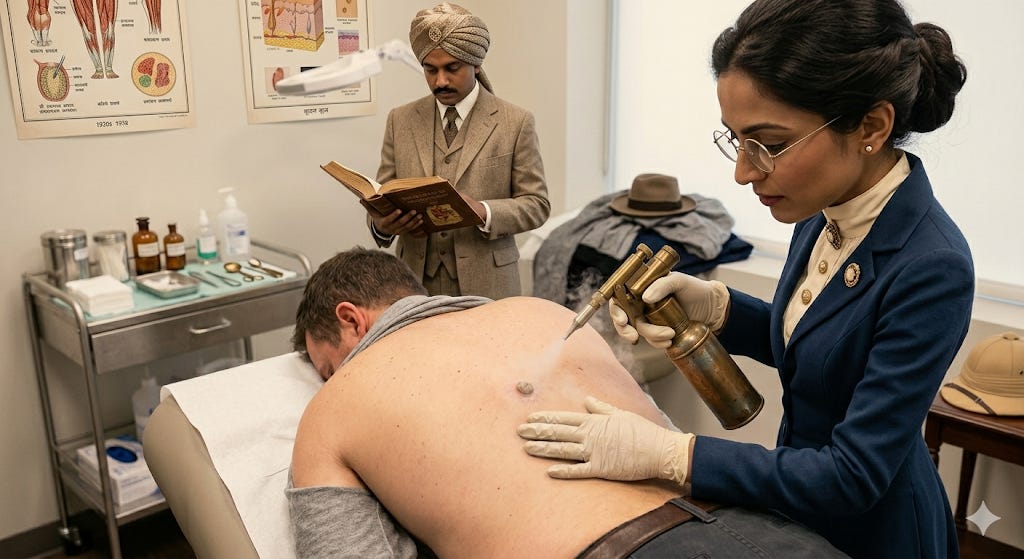
That context has changed significantly. Most urban and semi-urban dermatology clinics in India now have access to radiofrequency (RF) ablation — a technology that removes skin lesions under direct visual control, using local anaesthesia, typically in a single session. The conditions that once made cryotherapy a practical default no longer apply in these settings. Yet the default largely remains.
The core problem: the doctor cannot see what the cold is doing
Here is something that is rarely explained to patients: when a dermatologist freezes a lesion, they cannot directly observe how deep the cold is penetrating. They are estimating — judging freeze time, spray distance, and the formation of an ice ball on the surface — and inferring from these visible signs what is happening in the tissue beneath.

This means outcomes are inherently unpredictable. Too little freezing and the lesion is not fully cleared, requiring repeat sessions. Too much freezing and the surrounding healthy tissue is damaged — with consequences that are particularly significant in Indian patients.
RF ablation works differently. Tissue is removed layer by layer under direct vision. The clinician can follow the edges of the lesion precisely, adjust depth in real time, and stop when clearance is confirmed. The difference in control is not a matter of operator skill — it is a fundamental property of the two techniques.
Why this matters especially for darker skin tones
Most patients at Indian dermatology clinics have medium to dark brown skin tones. In these skin types, imprecise tissue injury — the kind that cryotherapy can produce — carries a well-recognised risk of causing pigmentation changes: patches of darker or lighter skin that can persist for months, or permanently.
It is not uncommon for patients to be left more distressed by this pigmentary change than they ever were by the original lesion. Cryotherapy was developed largely in and for populations with lighter skin tones. Its limitations in darker skin types are not incidental — they are a direct consequence of that origin, and they apply across every indication for which the procedure is currently used.
Specific situations worth reconsidering
Warts in children.
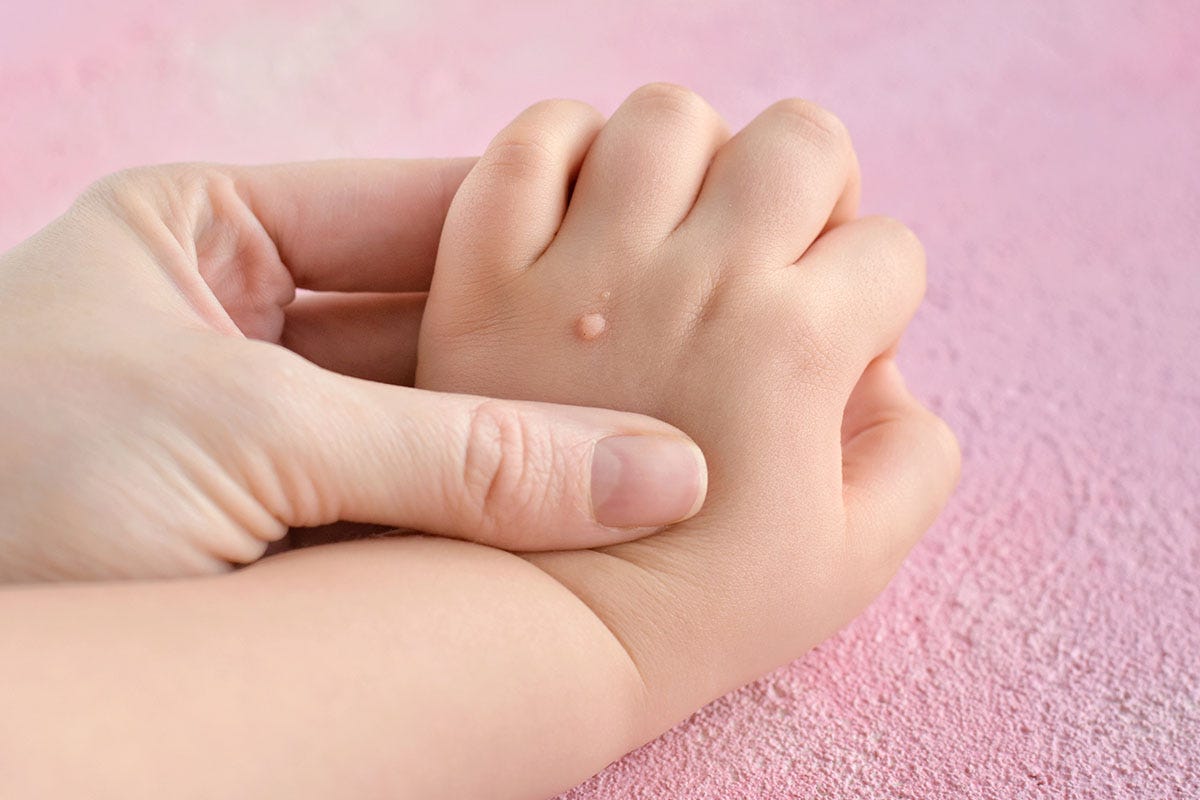
The usual argument for cryotherapy in children is needle avoidance — the assumption that freezing is less frightening than an injection. In practice, cryotherapy causes immediate and often severe pain, and it almost never clears a wart in a single session. A child who undergoes cryotherapy typically faces three, four, or five visits, each involving the same unanaesthetised pain. One carefully administered local anaesthetic injection, combined with a numbing cream beforehand, followed by a single RF procedure that clears the lesion completely, is a considerably smaller burden — when the comparison is framed honestly.
Anogenital warts.
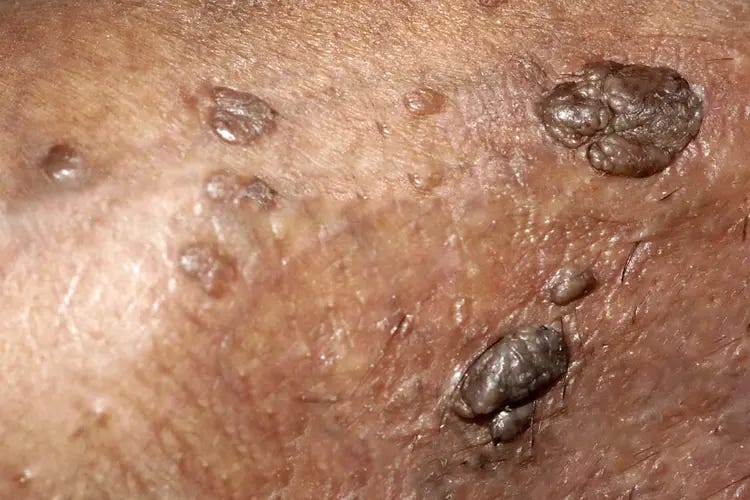
International guidelines recommend cryotherapy for this indication, but those guidelines were written for high-volume clinics without procedure rooms or electrosurgical equipment — settings common in the West, but not representative of most Indian dermatology offices. In a well-equipped clinic, RF ablation can clear lesions in a single sitting, under local anaesthesia, with greater precision and less procedural pain.
Keloid scars.
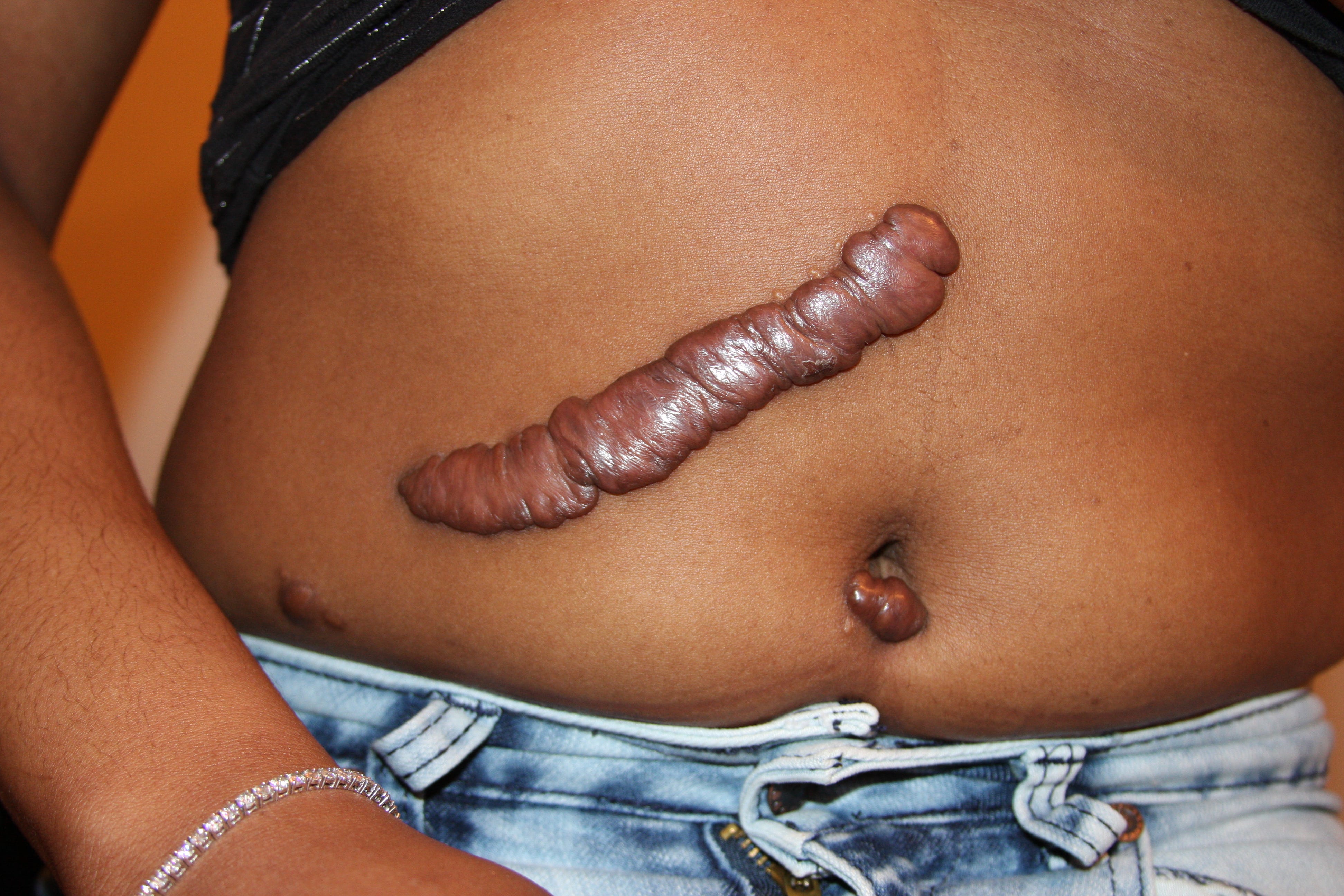
Cryotherapy is used to reduce the bulk of keloid scars, but published evidence has specifically cautioned against its use in darker skin types due to the risk of hypopigmentation — pale patches that can themselves become a significant cosmetic problem. In a population where keloid-prone individuals are disproportionately represented in darker skin types, this is not a minor caveat.
What patients can reasonably ask
Comparative trials directly pitting RF ablation against cryotherapy for these indications are limited, and intellectual honesty requires acknowledging that. The argument for change is currently based on the mechanistic properties of the two techniques and on clinical experience, rather than on large randomised studies. Those studies should be done.
In the meantime, patients are entitled to understand their options. If you are offered cryotherapy in a well-equipped clinic, it is reasonable to ask whether RF ablation is available, how many sessions are typically needed for each approach, and what the likely cosmetic outcomes are for your skin type.
The deeper question
Cryotherapy’s simplicity served clinicians and clinics — it reduced equipment requirements, shortened procedure times, and required no anaesthetic support. These are not advantages for the patient.
A treatment developed for the constraints of an underequipped system should not persist as the default once those constraints no longer apply. In well-resourced Indian dermatology practice, cryotherapy’s continued use reflects institutional inertia more than clinical reasoning. Each patient who undergoes repeated sessions of unanaesthetised tissue destruction, when a single precise procedure under local anaesthesia was available, deserves a better explanation than tradition.