

Most people think of the skin as the outer covering of the body. But the skin is connected to almost everything happening inside us—our hormones, blood sugar, circulation, nutrition, immune system and internal organs.
Sometimes, a change in the skin is the first visible sign that something is wrong inside.

A lump in the skin that revealed an internal cancer

Early in my career, I treated an 86-year-old woman who had several painless lumps over her neck and upper back.
The lumps looked like a skin problem. But she had also been losing weight and having repeated episodes of diarrhoea.
A biopsy showed that the lumps were actually deposits of an internal cancer that had spread to the skin.
This was a rare case, but it taught me an important lesson:
The skin may sometimes speak before the internal disease becomes obvious.
Fortunately, most skin problems are not signs of cancer or serious internal disease. But certain patterns should make us look beyond the skin.
Diabetes often shows itself through ordinary skin problems
The skin signs of diabetes are usually not the dramatic conditions shown in medical textbooks.
More often, patients come with very common problems such as:
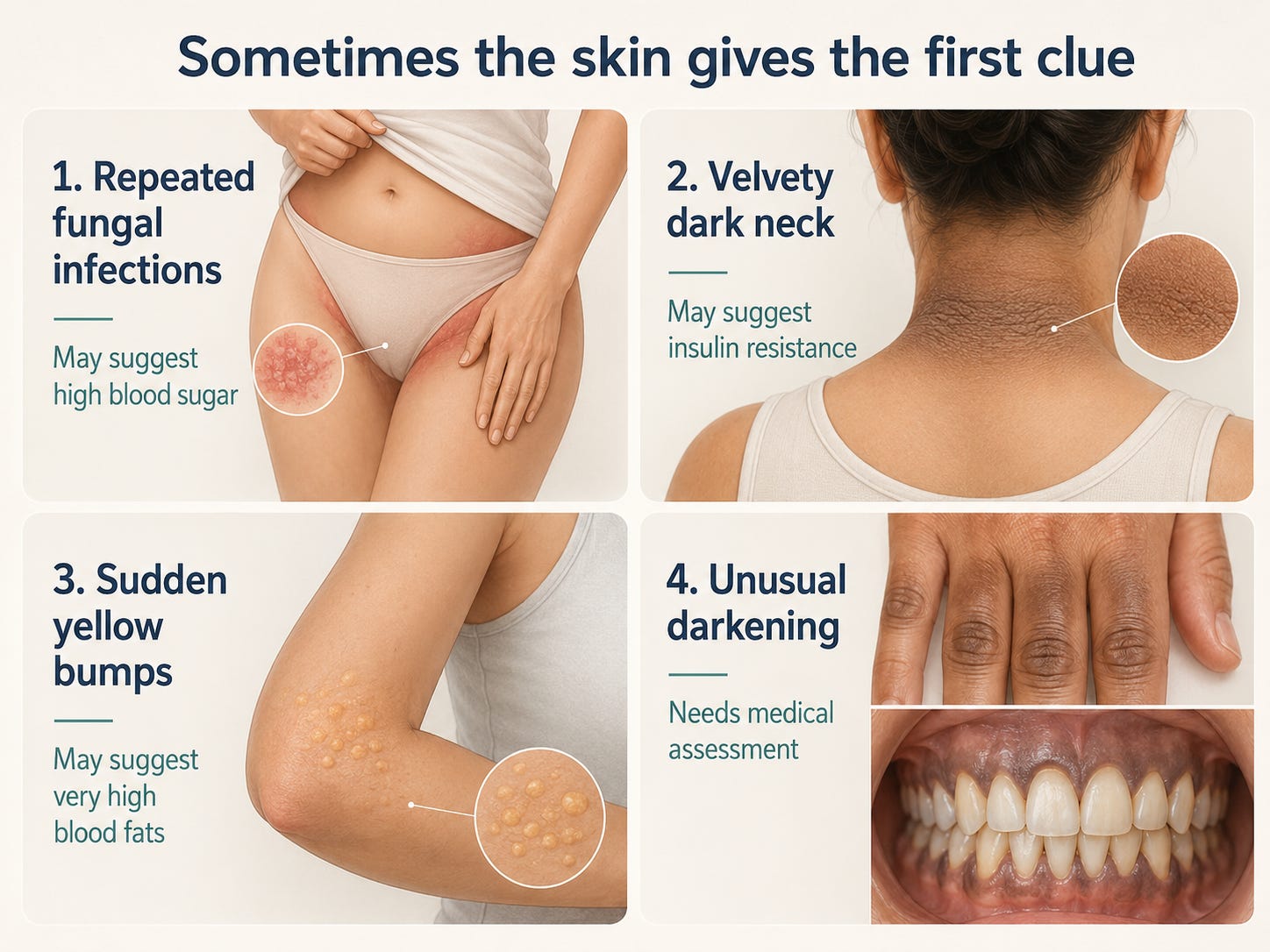
repeated fungal infections
itching or infection around the genitals
recurrent boils
repeated cellulitis
wounds that are slow to heal
severe itching without a clear rash
foot ulcers or gangrene
A man with repeated redness and itching around the foreskin, or a woman with repeated fungal infection in the groin or genital area, may have undiagnosed or poorly controlled diabetes.
These problems do not automatically mean diabetes. But when they keep returning, checking blood sugar is often sensible.
Some patients say, “My wounds heal well, so I cannot have diabetes.”
That is not a reliable test. Many people with diabetes continue to heal normally, especially in the early stages.
A dark neck may be more than pigmentation
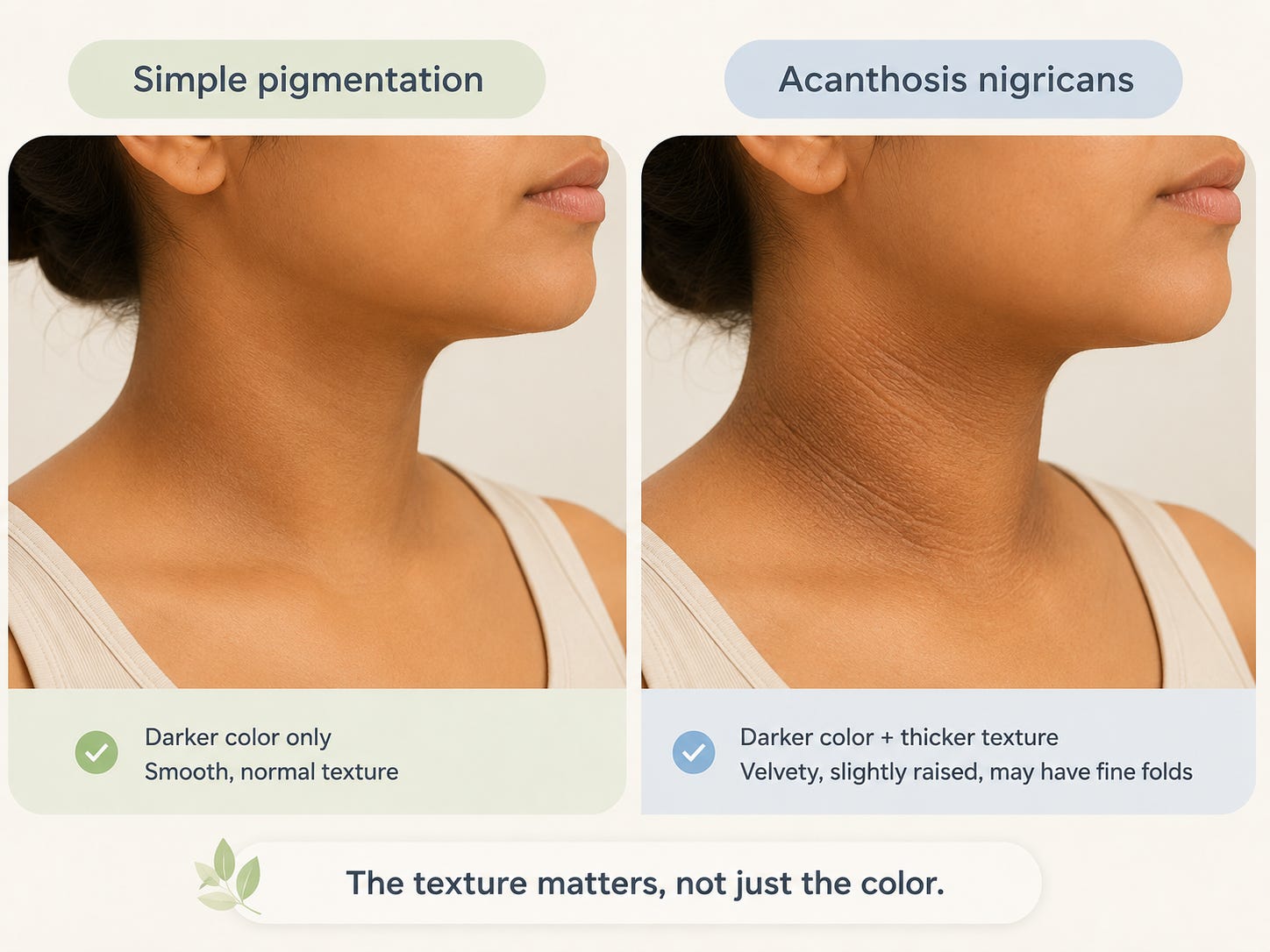
Some people develop dark, thick, velvety skin around the neck, armpits or groin.
This is often linked to the body becoming less responsive to insulin. It is especially common in people who are overweight.
The important clue is not simply the colour. The skin also feels thicker and velvety.
It does not mean that the person definitely has diabetes. But it is a reason to look at weight, waist size, blood pressure, family history and blood sugar.
In children, this should not lead to a large battery of hormone tests. Most overweight children need sensible assessment, healthier eating, more physical activity and blood sugar testing at the appropriate age or when other risk factors are present.
Acne and facial hair do not always mean a hormone problem
Acne is common. A few facial hairs are also common.
Neither automatically means that a woman has a hormonal disorder.
Investigation becomes more useful when there is:
obvious coarse facial or body hair
repeatedly irregular periods
significant scalp hair thinning
very rapid worsening
deepening of the voice or other masculine changes
The speed of change is important.
Facial hair that has slowly increased over many years is different from coarse hair appearing suddenly over a few months, together with voice change, muscle development or rapid scalp hair loss.
Sudden changes need prompt investigation. They should not simply be labelled as menopause or polycystic ovarian syndrome.
Sudden yellow bumps may warn of very high blood fats
A sudden outbreak of many small yellowish bumps over the buttocks, elbows or limbs can occasionally indicate extremely high levels of triglycerides—one type of fat in the blood.
This may happen in people with poorly controlled diabetes.
Very high triglycerides can inflame the pancreas and cause severe abdominal pain. In such cases, the skin may provide an early warning of a potentially serious problem.
Hair loss and dry skin may occur with thyroid disease
Hair loss and dry skin are common complaints in people with thyroid disease.
However, they are also extremely common in people without thyroid disease. Stress, ageing, nutritional problems, medicines and genetic hair loss can produce the same symptoms.
Hair loss alone is therefore not proof of a thyroid problem.
Testing is more useful when hair or skin changes occur along with symptoms such as unexplained weight change, unusual tiredness, constipation, palpitations, menstrual changes or intolerance to heat or cold.
Unusual skin darkening can occasionally signal an adrenal problem
A rare condition called Addison’s disease can cause unusual darkening of the skin.
The darkening may be especially visible over the knuckles, gums, scars and skin folds. The person may also have severe tiredness, weight loss, dizziness, vomiting or salt craving.
However, several other conditions—including vitamin B12 deficiency—can produce similar pigmentation.
Pigmentation alone is not enough to make the diagnosis.
Sometimes the treatment causes the internal problem
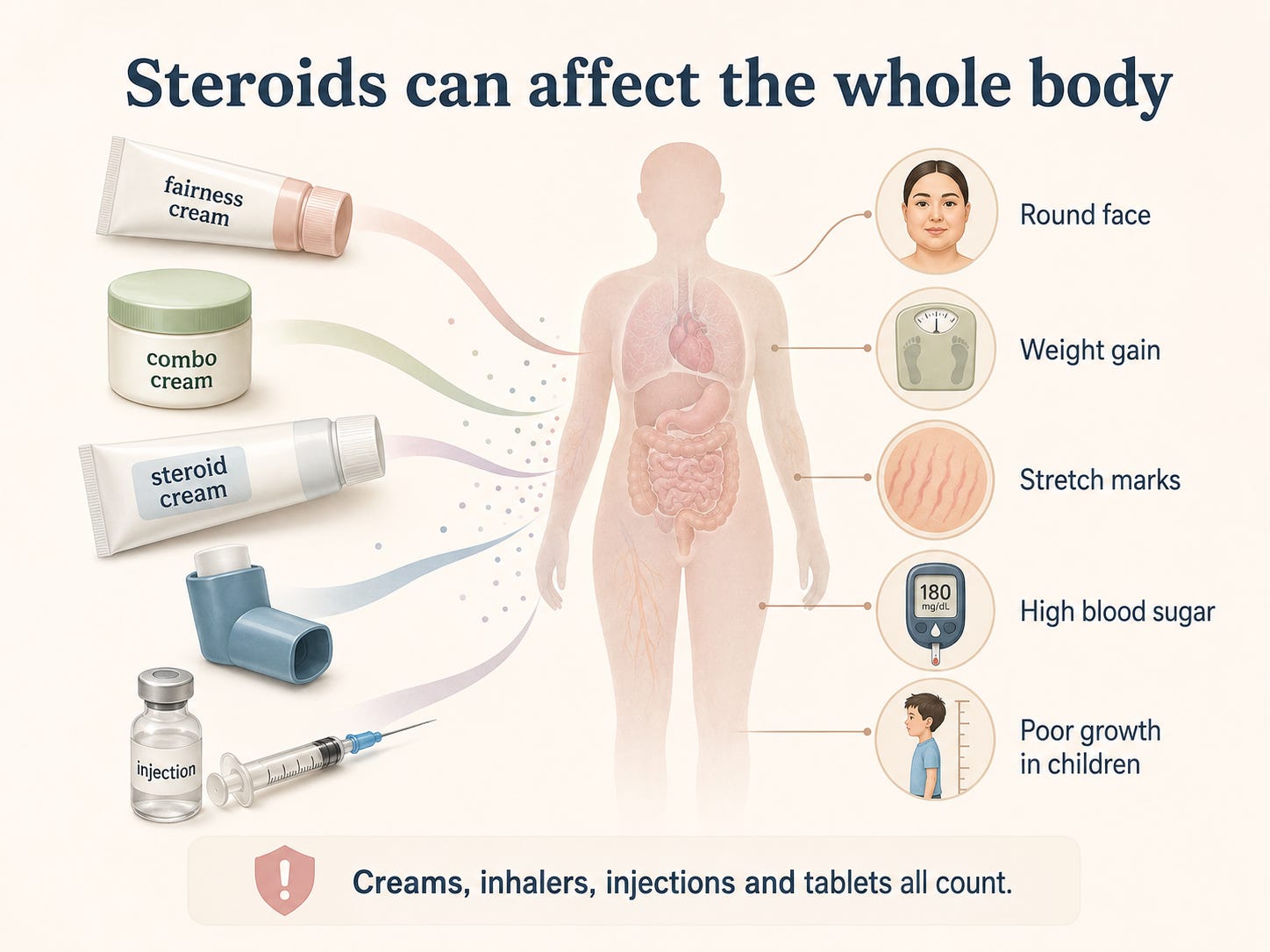
Steroid creams are widely misused for fungal infections, itching, acne, fairness and even diaper rash.
Some so-called combination, fairness or herbal creams also contain strong steroids without making this clear.
When powerful steroid creams are used over large areas or for long periods, they can enter the bloodstream. This may cause weight gain, a rounded face, acne, stretch marks, high blood pressure, raised blood sugar, muscle weakness and poor growth in children.
Long-term steroid use can also reduce the body’s own production of natural steroid hormones. Suddenly stopping heavy steroid use may therefore be dangerous.
Patients should tell their doctor about every form of steroid they use—not only tablets, but also creams, injections, inhalers and nasal sprays.
Rare skin signs can occasionally protect an entire family
Some rare inherited diseases affect both the skin and hormone-producing organs.
Small lumps on the lips or tongue, unusual facial bumps, multiple fatty lumps or firm skin-coloured nodules may occasionally be clues to inherited conditions linked to thyroid, parathyroid, pituitary or pancreatic tumours.
These conditions are uncommon, and people should not try to diagnose them from internet photographs.
But when the pattern is recognised by a doctor, it may lead to early testing—not only for the patient, but sometimes for close relatives as well.
When should a skin problem raise concern?
A skin problem deserves a closer look when it:
appears suddenly or spreads rapidly
keeps returning despite proper treatment
occurs with unexplained weight loss or severe tiredness
is associated with repeated infections
comes with menstrual or rapid hormonal changes
appears together with unusual thirst or frequent urination
occurs with abdominal pain or other general symptoms
is also present in several family members
This does not mean that every rash needs blood tests or scans.
Most skin diseases remain diseases of the skin.
The skill lies in recognising when the skin problem does not fit the usual pattern.
The skin is a clue—not a diagnosis
The skin can reflect changes in blood sugar, hormones, nutrition, circulation, immunity and internal organs.
Sometimes it provides the first warning that something is wrong.
But a skin sign is not a diagnosis by itself. It must be interpreted along with the person’s symptoms, medical history and carefully chosen tests.
The skin may be the mirror of internal health—but the reflection still needs to be interpreted correctly.