

Somewhere in the world right now, a cricket match is being played under a hard afternoon sun.
A bowler runs in.
The ball is released.
A bat connects.
The crack echoes across the ground.
Thousands of kilometres away, in a living room, I am watching it happen live on a flat screen mounted on the wall.

I have watched this happen thousands of times. And recently I began asking a question I should probably have asked much earlier.
Do we actually understand how this works?
We think we do. But if you follow the chain carefully — from the ground in Mumbai to the screen in Visakhapatnam — something slightly uncomfortable begins to appear.
The deeper the explanation goes, the more our knowledge quietly turns into description.
The Chain
A camera captures light bouncing off the players.
That light strikes a sensor, dislodging electrons — a phenomenon described by Albert Einstein in 1905, the work that later earned him the Nobel Prize.
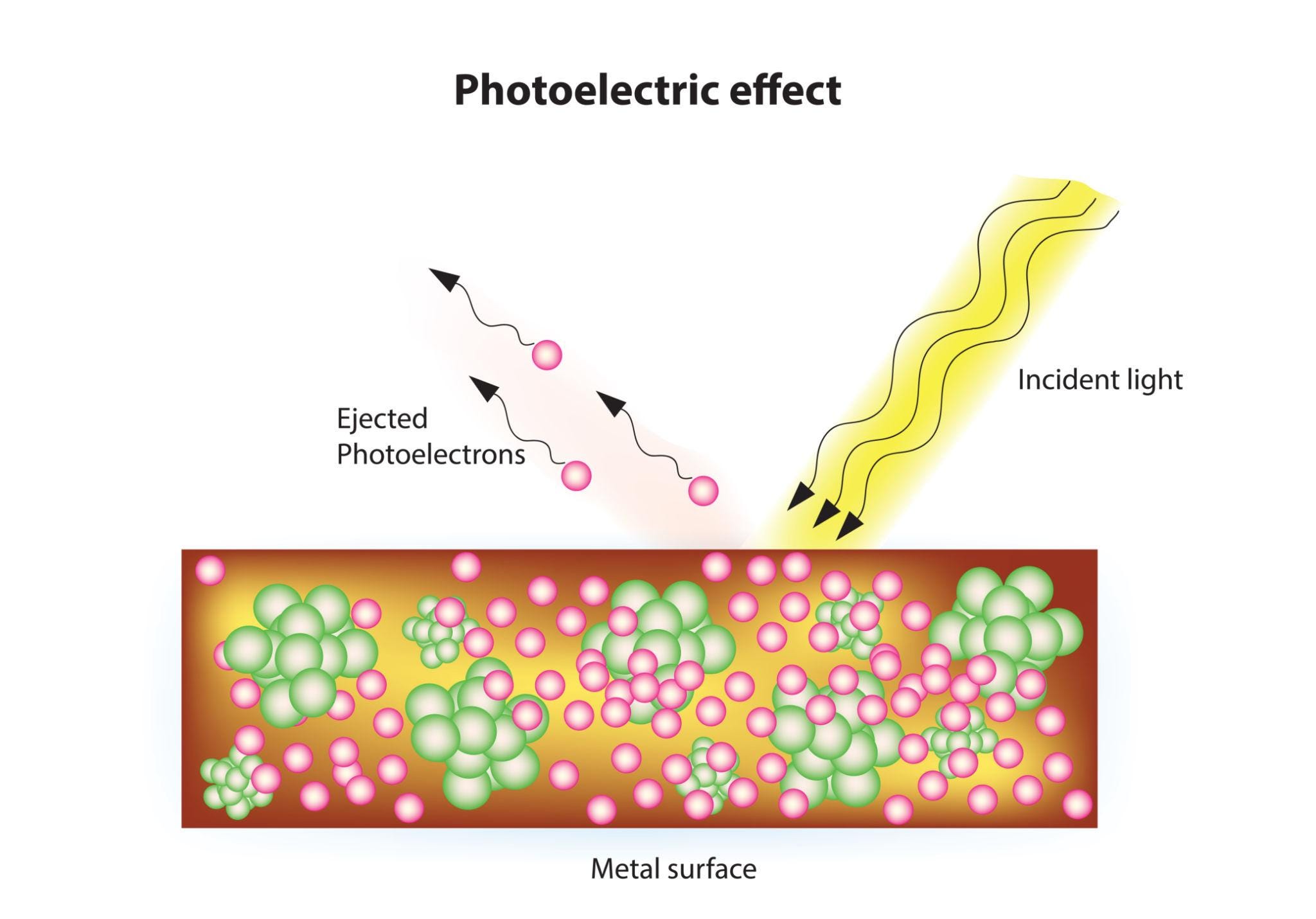
Those electrons are counted and converted into numbers.
The numbers are compressed using mathematical algorithms, encoded into signals, and transmitted across continents — through fibre optic cables as pulses of light or through the air as electromagnetic waves you cannot see, touch, or smell.
Your router receives those signals.
Your television decodes them.
Inside the television, a chip tells millions of pixels exactly what colour to be, sixty times every second.
And suddenly you are watching a cricket match happening far away.
Written down like this, the process sounds complete. It feels as if we understand exactly what is happening.
But look a little more carefully, and something shifts.
What Is Actually Travelling Through Space?
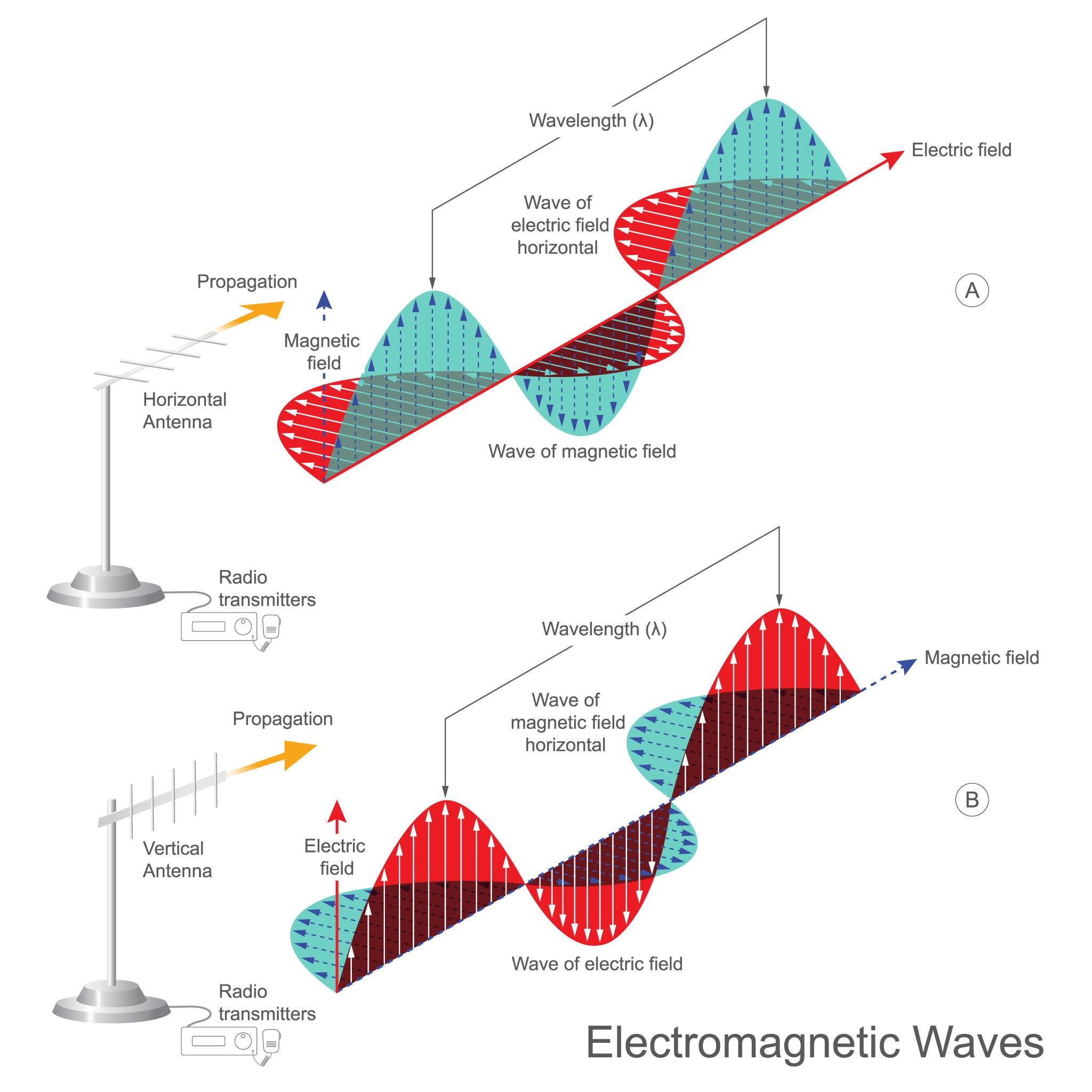
The signal carrying that cricket match moves through space as electromagnetic waves.
They pass through walls.
Through air.
Through what appears to be empty space.
When those waves reach your antenna or Wi-Fi chip, electrons inside the conductor begin oscillating in response, reproducing the original signal.
We have extraordinarily precise equations that describe this behaviour. James Clerk Maxwell wrote them down in 1865, and engineers have used them ever since to design radios, satellites, fibre-optic networks, and televisions.
The equations are spectacularly successful.
But they describe how electromagnetic fields behave. They do not tell us what a field fundamentally is.
What exactly is travelling through space when a signal moves?
Richard Feynman, one of the greatest physicists of the twentieth century, was unusually blunt about this question. We know how to describe electromagnetic fields with great accuracy, he said — but what they ultimately are remains unclear.
We have named the phenomenon.
We have measured it.
We have built an entire technological civilisation using it.
But the underlying nature of the thing itself remains an open question.
The Assumption Nobody Mentions
Every step in this chain rests on an assumption so obvious that it usually goes unnoticed.
The assumption is this:
The laws of nature are the same everywhere, and they will remain the same tomorrow as they are today.
The physics governing electrons in a camera in Mumbai must be identical to the physics governing electrons in a television in Visakhapatnam.
Every experiment ever performed confirms this remarkable regularity.
But there is a subtle philosophical catch.
In 1739 the philosopher David Hume pointed out that observing something happen repeatedly does not logically prove that it must always happen.
The sun has risen every day in recorded history.
That does not strictly prove it must rise tomorrow.
Our confidence that nature will remain consistent is based on overwhelming experience — but it is still, at its core, an assumption.
Every piece of technology we have ever built rests quietly on top of that assumption.
It works magnificently.
But it is still an assumption.
And Then There Is You
Here is perhaps the strangest part of the entire story.
The television does not actually show you a cricket match.
What it produces is a grid of coloured light — millions of tiny squares, each glowing at a particular brightness and hue.
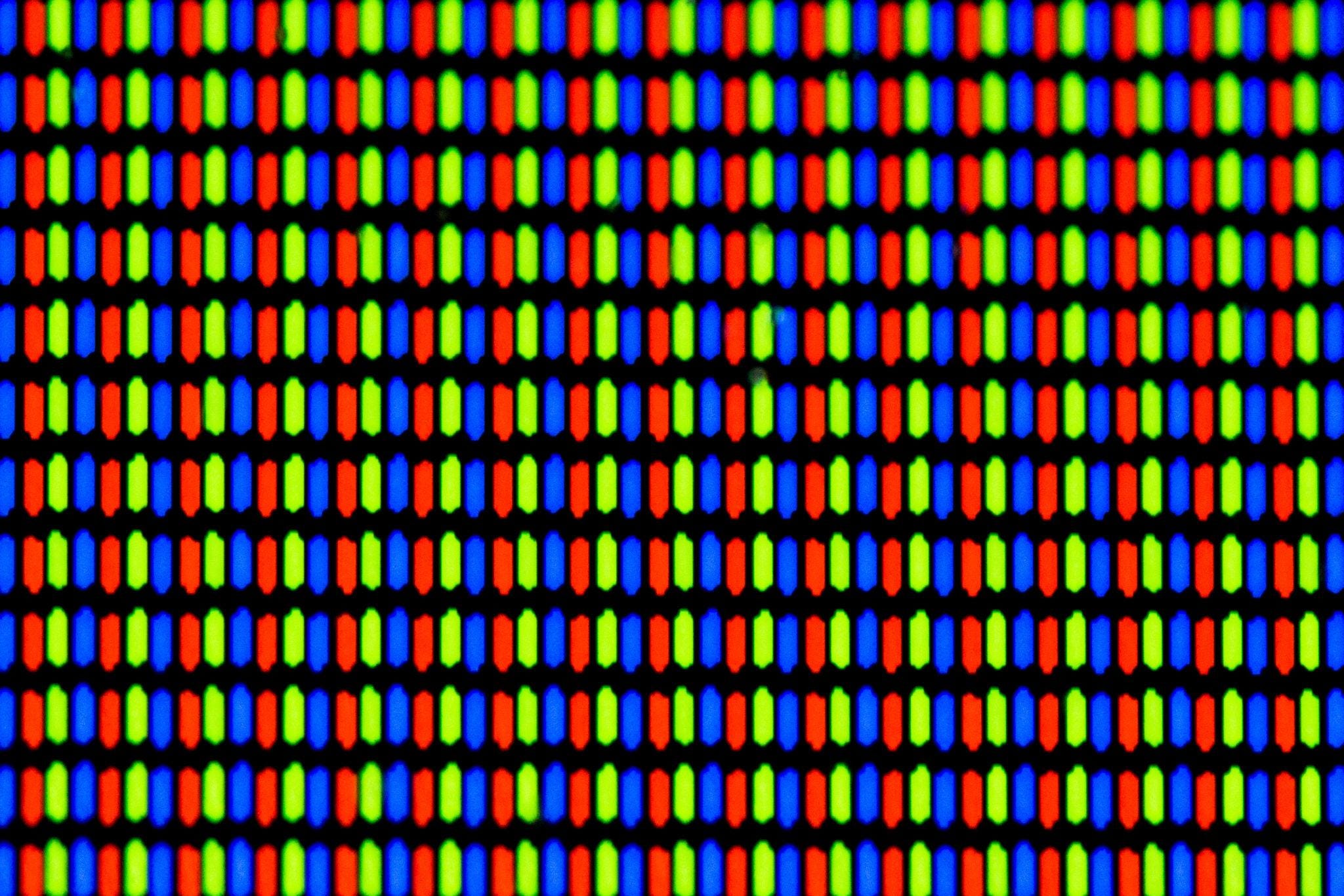
That is all the screen does.
Your brain does the rest.
From that flat grid of coloured light your mind constructs depth, motion, distance, tension — the experience of watching a fielder sprint across grass or a ball racing to the boundary.
How electrical signals in neurons become the subjective experience of seeing something is one of the most difficult questions in neuroscience and philosophy.
It is often called the Hard Problem of Consciousness.
And we are nowhere close to solving it.
The final step in the entire chain — the step that actually produces the experience of watching the match — is the step we understand the least.
What We Actually Have
Despite all of this, the system works beautifully.
We have the recipes.
Every component in that chain — the cameras, the compression algorithms, the transmission networks, the display electronics — has been designed, tested, refined, and perfected over decades.
The engineering is real and extraordinarily reliable.
But knowing a recipe is not the same thing as understanding the ingredients.
At some point in almost every scientific explanation, the chain stops.
We reach a level where we can describe what happens when certain conditions are met, but we can no longer say why the universe behaves that way.
Fields.
Forces.
Consciousness.
At the deepest levels, explanation quietly gives way to description.
We stop asking why and begin saying:
This is what happens when you do this.
Medicine Lives at the Same Boundary
I encounter this same boundary every day in medicine.
In dermatology we examine patterns in the skin, interpret what we see under the microscope, and choose treatments that reliably improve disease.

But for many conditions — inflammatory disorders, autoimmune diseases, even some cancers — the deeper question often remains unsettled.
Why does psoriasis appear in one person and not another?
Why does the immune system turn against the body at a particular moment?
Why do some treatments work spectacularly in one patient and barely at all in another?
Medicine frequently advances by discovering what works, long before we fully understand why it works.
A treatment is observed to help.
It is tested.
It becomes standard practice.
Only years or decades later does the deeper biology slowly reveal itself.
In that sense, modern medicine operates on the same principle as the television on your wall.
We understand enough to make it work.
The Wonder Was Always There

Most of the time we no longer notice the miracle.
But it is still there.
And the remarkable thing is not that we understand everything.
It is that we understand enough.
Enough to transmit images across oceans.
Enough to treat disease.
Enough to make complex systems work.
The deeper mysteries remain. We just accept that they are…..
But in the meantime, the match begins, the screen lights up, and everything simply works.