

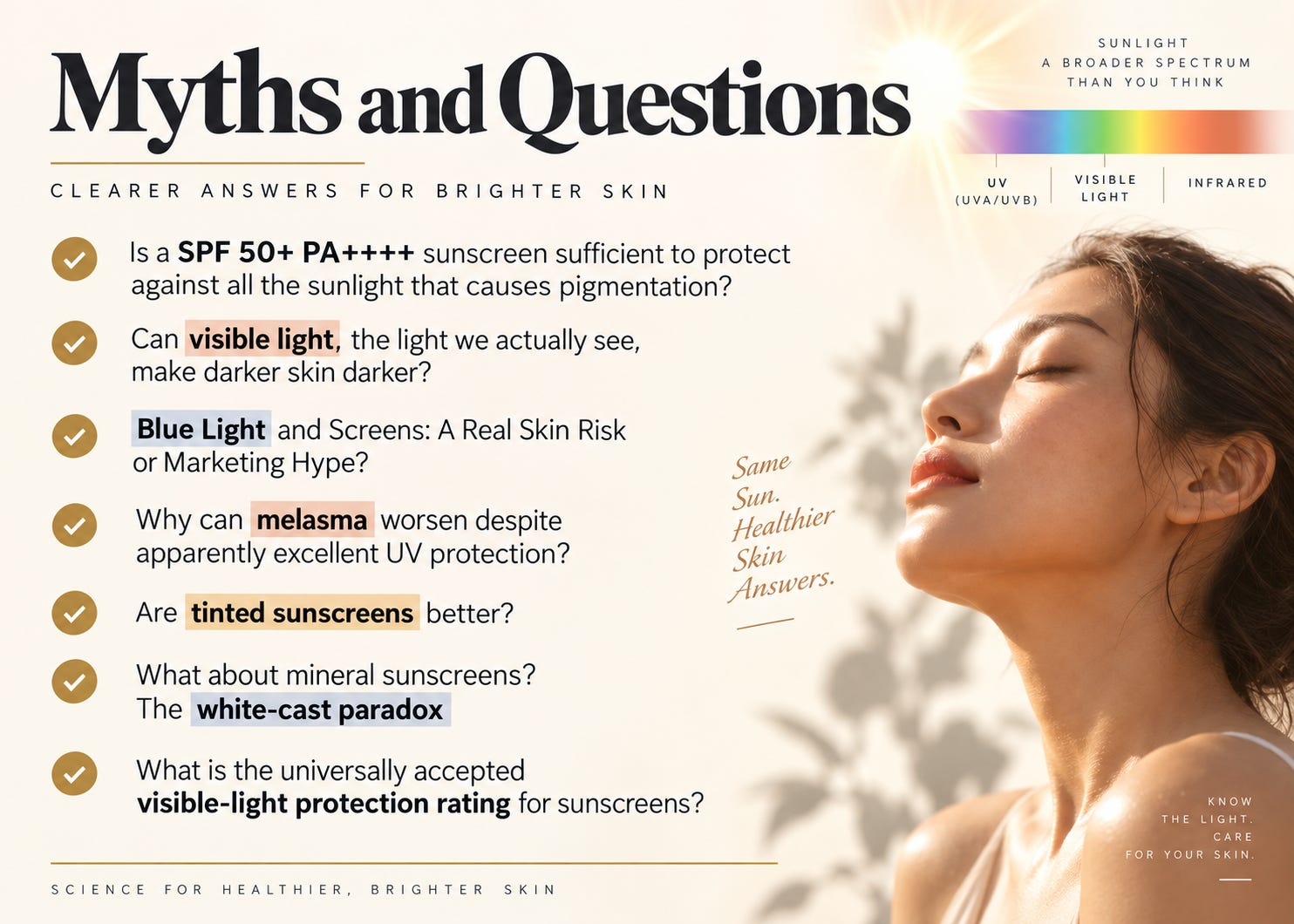
In Part 1, we looked at SPF and why it mainly tells us about protection against sunburn. In Part 2, we moved to UVA protection and examined what PA ratings, UVA Protection Factor and Boots stars actually mean.
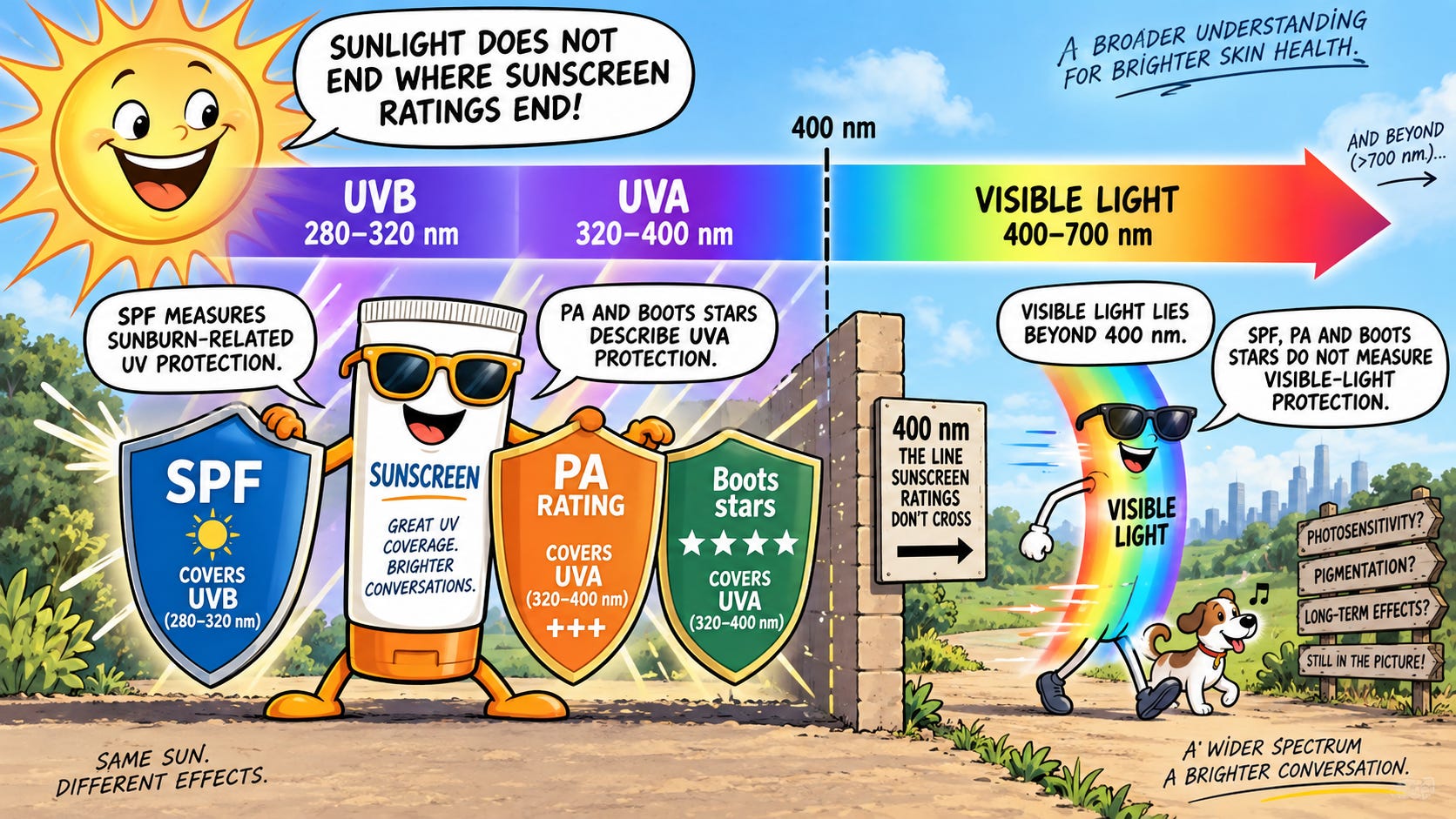
But sunlight does not end where these ratings end.
Ultraviolet B (UVB) spans approximately 280–320 nanometres, and ultraviolet A (UVA) about 320–400 nm. Beyond 400 nm lies visible light, roughly 400–700 nm.
SPF does not measure protection against visible light. Neither does the PA rating. Neither do Boots stars.
And for darker skin, melasma and post-inflammatory pigmentation, that missing part of the spectrum may matter more than many people realise.
So what about protection against visible light? Can visible light also cause pigmentation?
Though for many people protection from visible light may not matter greatly, for patients with melasma, post-inflammatory hyperpigmentation and darker skin phototypes, it matters!
In a landmark study, Mahmoud and colleagues exposed 20 volunteers with Fitzpatrick skin types IV–VI to either long-wave UVA, called UVA1, or visible light. Both produced pigmentation, but pigmentation produced by visible light was darker and more persistent. Visible light did not induce pigmentation in the small comparison group with skin type II. The study was supported partly by an unrestricted grant from Johnson & Johnson Consumer Companies; the authors declared no conflict of interest.
Not every colour of visible light behaves the same way. In another study involving skin types III and IV, blue-violet light at 415 nm produced clear dose-dependent hyperpigmentation, whereas red light at 630 nm did not. Remarkably, pigmentation after a single sufficiently large 415-nm exposure remained measurable for up to three months.
But what about blue light from phones and screens?
If blue-violet light can cause pigmentation, an obvious question follows: should we worry about phones, tablets and computer screens?
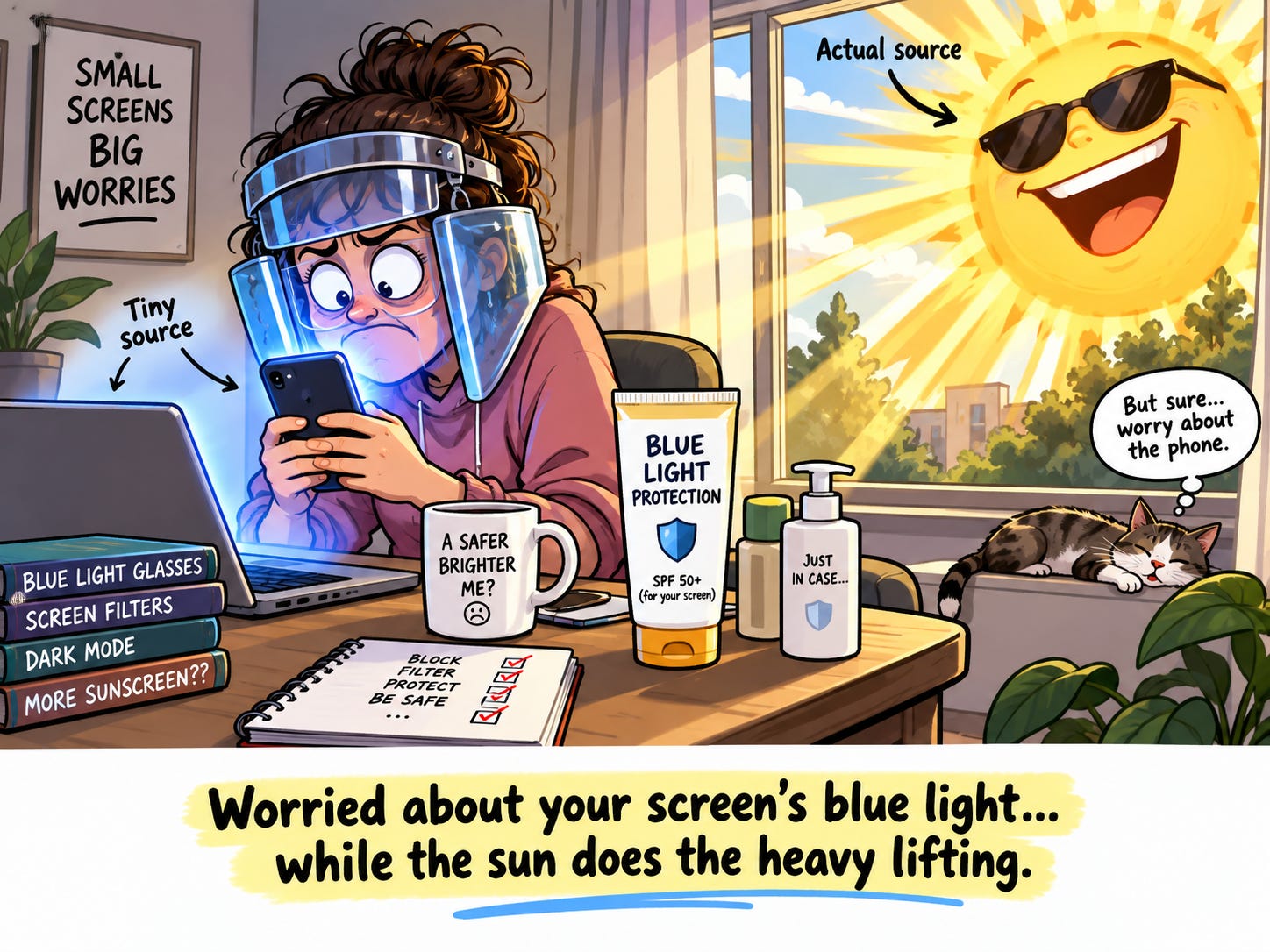
Blue-violet light from sunlight can induce pigmentation when the skin receives a sufficiently large dose. But the intensity of visible light emitted by electronic screens is dramatically lower than that of sunlight. Current evidence has not shown that ordinary exposure to phones, computers or televisions causes meaningful pigmentation, worsens melasma or contributes significantly to photoageing.
A 2026 international consensus on hyperpigmentation noted that blue-light intensity from electronic devices is roughly 100–1000 times lower than sunlight, and there is no convincing evidence that normal screen exposure is clinically important.
So when a sunscreen advertises “blue-light protection”, the relevant question is usually whether it protects against solar blue-violet light, not whether it shields you from your phone.
Your WhatsApp screen is not the blue light your melasma needs protection from.
There is another complication. Visible light does not act completely independently of UVA. A study in skin types IV–VI found that visible light containing less than 0.5% UVA1 produced significantly greater pigmentation than pure visible light, suggesting interaction between the two regions of the spectrum.
This matters because the boundary between long-wave UVA1 and visible light sits around 400 nm, precisely where conventional transparent sunscreens may provide increasingly variable protection.
An excellent UV sunscreen is not necessarily an excellent pigmentation sunscreen.
Melasma provides some of the best clinical evidence that protection beyond ultraviolet radiation matters. In a randomized trial of 68 patients with melasma, both groups used sunscreen with SPF 50 or greater and all received 4% hydroquinone. One sunscreen protected mainly against ultraviolet radiation; the other additionally contained iron oxide pigments designed to attenuate visible light.
After eight weeks, the group receiving ultraviolet plus visible-light protection showed 15% greater improvement in the Melasma Area and Severity Index and 28% greater improvement on objective colorimetry than the UV-only group.
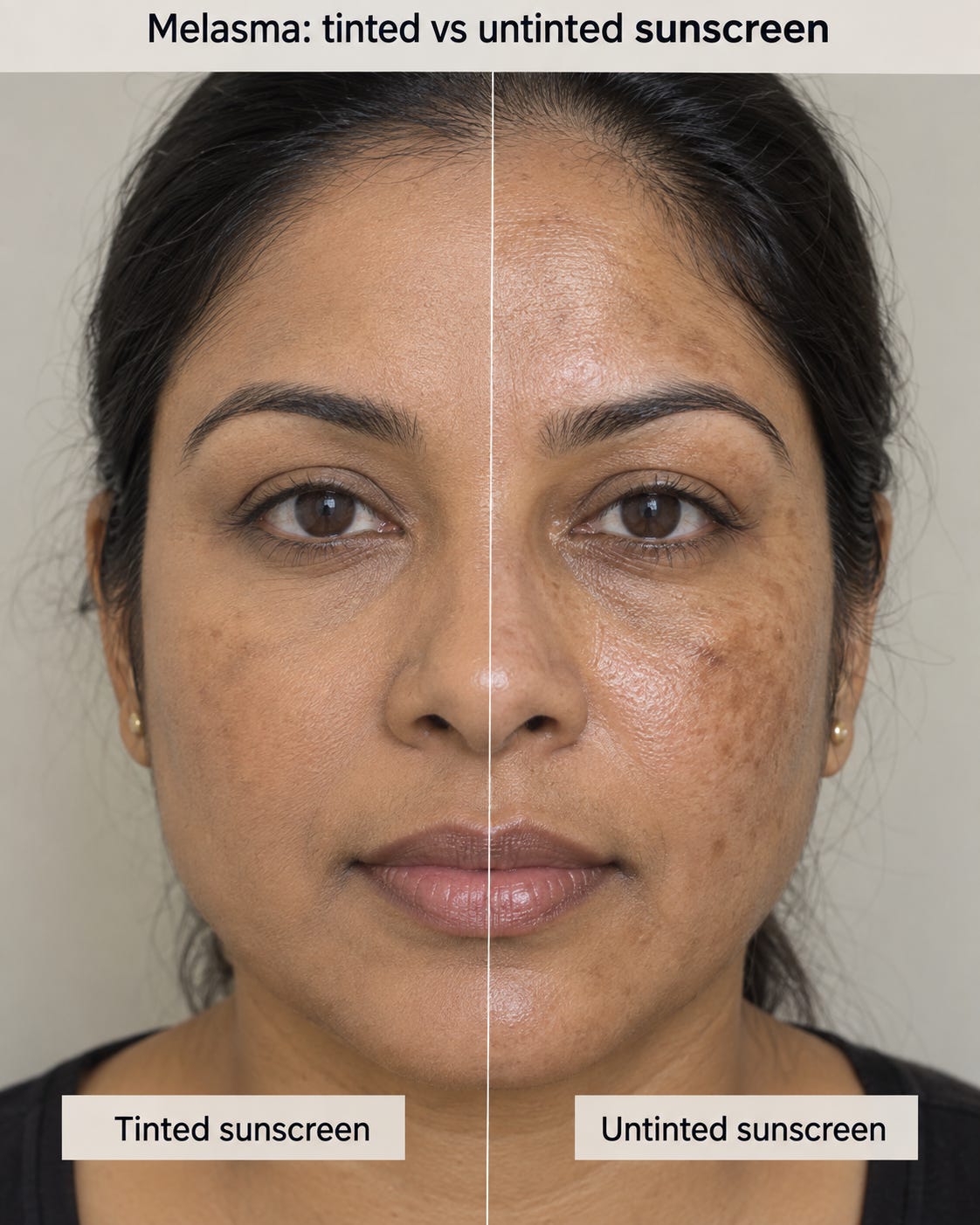
For melasma, UV protection alone may not be enough. Visible light can still contribute to pigmentation, which is why some tinted sunscreens may offer an advantage.
What are tinted sunscreens?
Most modern sunscreens are designed to become relatively transparent when applied. That is cosmetically desirable, but transparency means that much of visible light continues through the film.
Iron oxides are pigments. Depending on their type, particle properties, concentration and formulation, they absorb and scatter parts of the visible spectrum. This is why sunscreens designed to provide meaningful visible-light protection are generally tinted.
In one study of Fitzpatrick type IV skin, two iron-oxide-containing tinted formulations reduced visible-light-induced pigmentation substantially better than an untinted mineral SPF 50+ sunscreen containing zinc oxide and titanium dioxide. However, this evidence requires a clear caveat: seven of the eight authors were affiliated with L’Oréal Research and Innovation.
What about mineral sunscreens? The white-cast paradox
Here lies an important irony. Traditional mineral sunscreens could attenuate visible light precisely because they were visibly white on the skin. Larger particles of zinc oxide and titanium dioxide scatter visible wavelengths, producing the familiar white cast.
Modern formulations have worked hard to eliminate that problem. By micronising the particles and making the sunscreen increasingly transparent, manufacturers have made mineral sunscreens far more cosmetically acceptable, especially on darker skin.
But that creates a paradox: the more invisible a mineral sunscreen becomes, the less useful its “mineral” nature may be for visible-light protection. It may still provide excellent UVB and UVA protection, but it no longer follows that it will substantially attenuate visible light.
In other words, the much-disliked white cast was not merely a cosmetic defect; it was evidence that visible light was being scattered. Remove the white cast, and much of that advantage may disappear.
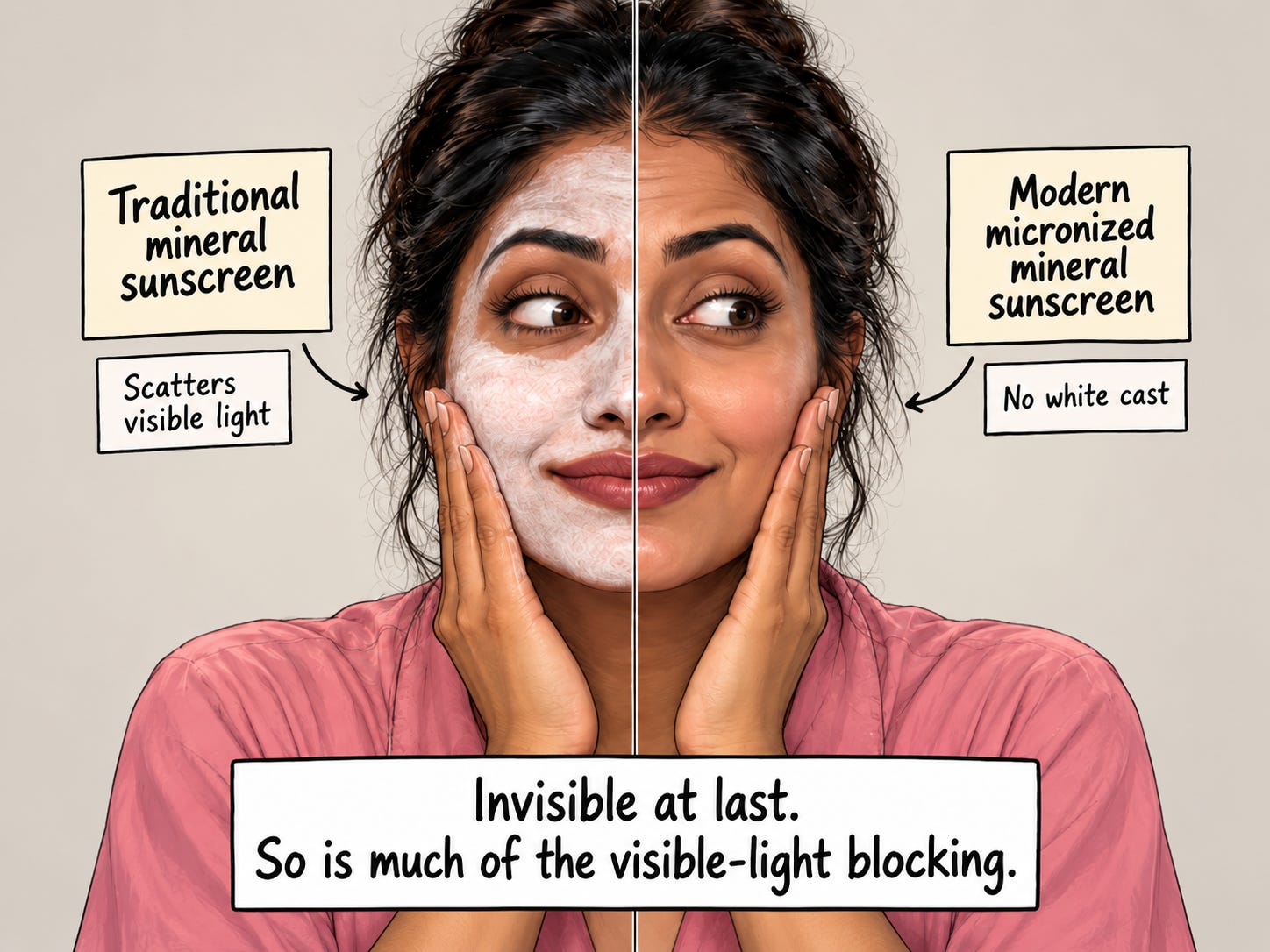
So, when visible-light-induced pigmentation is the concern, the label “mineral sunscreen” is not enough. Iron oxides or other pigments, and preferably testing of the finished formulation against visible-light-induced pigmentation, are far more informative.
But how much visible-light protection does a tinted sunscreen provide?
This is where sunscreen science currently becomes frustrating. SPF has standardized methods. UVA Protection Factor has standardized methods. There is still no universally accepted international standard equivalent to SPF for visible-light protection.
A 2026 international consensus panel specifically concluded that agreed standardized methods for assessing visible-light photoprotection remain lacking. Methods called Visible Light Protection Factor or Pigmentation Protection Factor have been proposed, but different investigators use different light sources, wavelengths, doses and pigmentary endpoints.
A label saying “visible-light protection” or “blue-light protection” cannot presently be interpreted like SPF 50 or UVA-PF 20.
For dermatologists, the sensible question is not simply whether iron oxide appears in the ingredient list, but whether the finished formulation has actually been tested against visible-light-induced pigmentation. Ideally, this should involve in-vivo exposure to solar-simulated visible light, roughly 400–700 nm, with objective colour measurement such as the Individual Typology Angle (ITA°). A reported visible-light protection factor can be useful, but unlike SPF or UVA-PF, there is still no universally standardized visible-light rating. In-vitro visible-light transmission testing can provide supporting evidence, but clinical pigmentation testing of the finished product is stronger.
A 2026 analysis of tinted sunscreens illustrates the transparency problem: among 31 brands examined, six claimed visible-light protection, but only one publicly described specific corresponding testing.
The Indian problem: the tint itself
Scientifically, tinted iron-oxide sunscreens make excellent sense for melasma and pigmentation-prone darker skin. Cosmetically, they can fail for a much simpler reason: the shade looks wrong.
A tint that blends beautifully on one complexion may look grey, pink, orange, pale or obviously made-up on another. In India, with its enormous range of skin colours and undertones, that matters. Yet there is surprisingly little high-quality evidence on shade acceptability across Indian, particularly South Indian, skin.
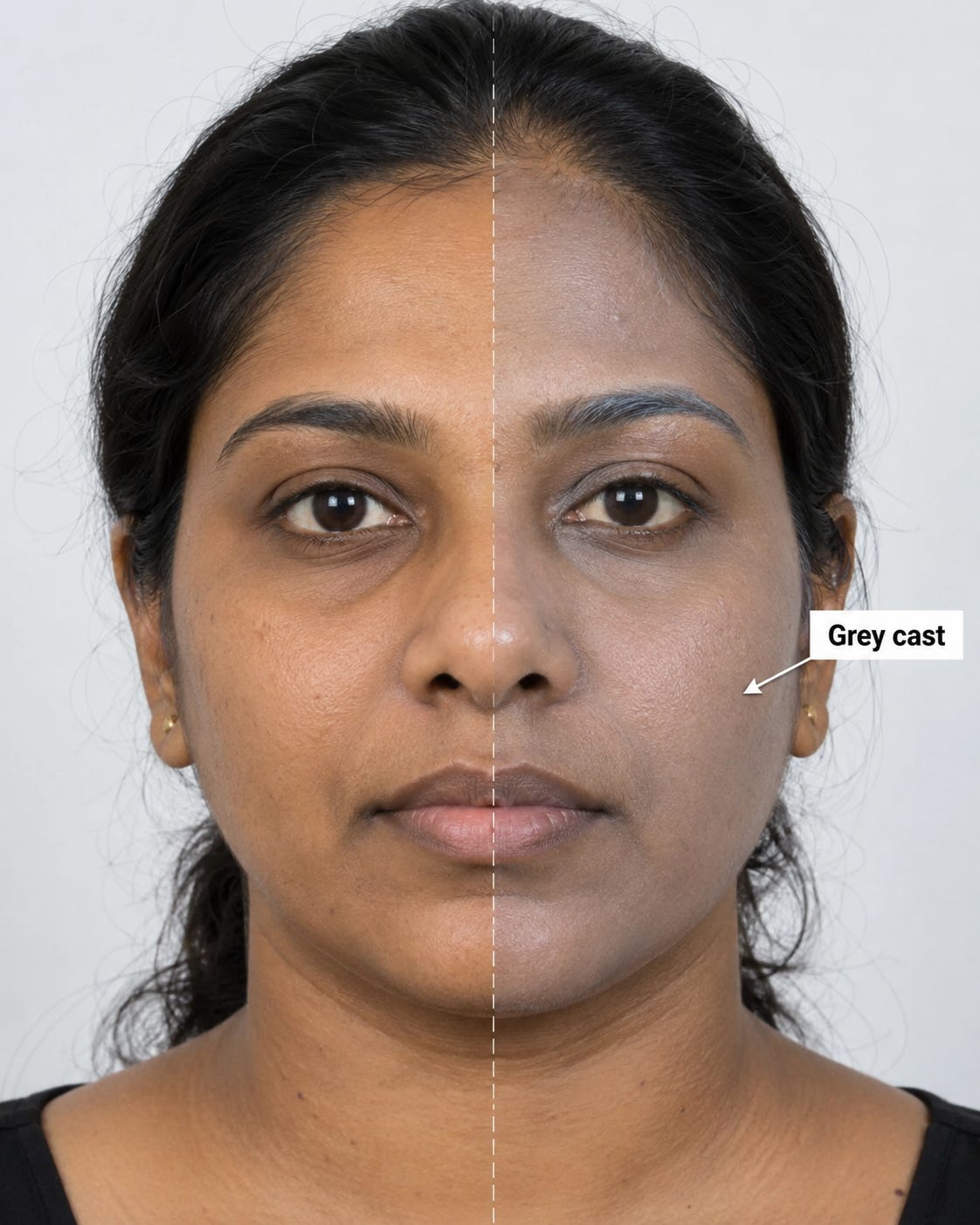
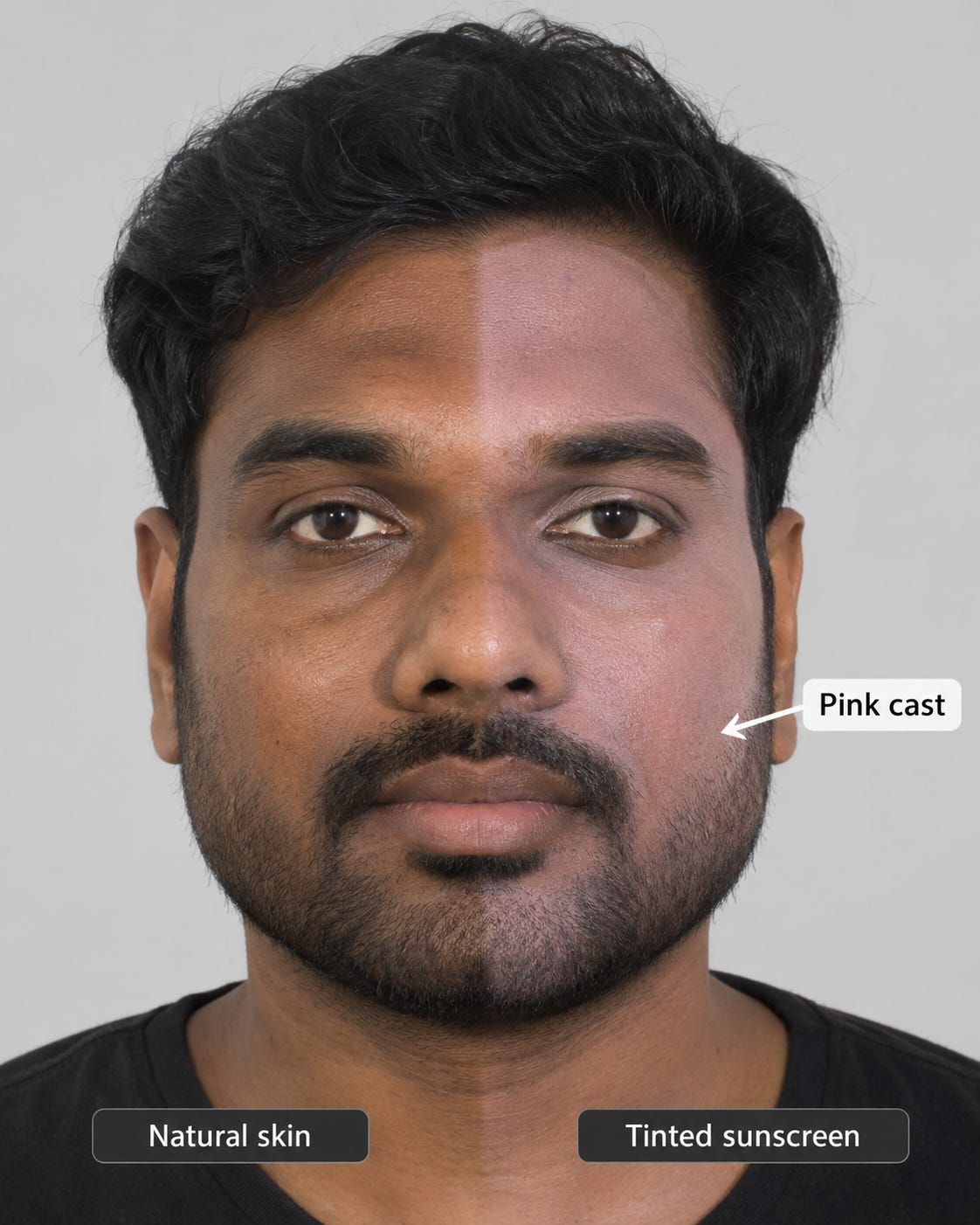
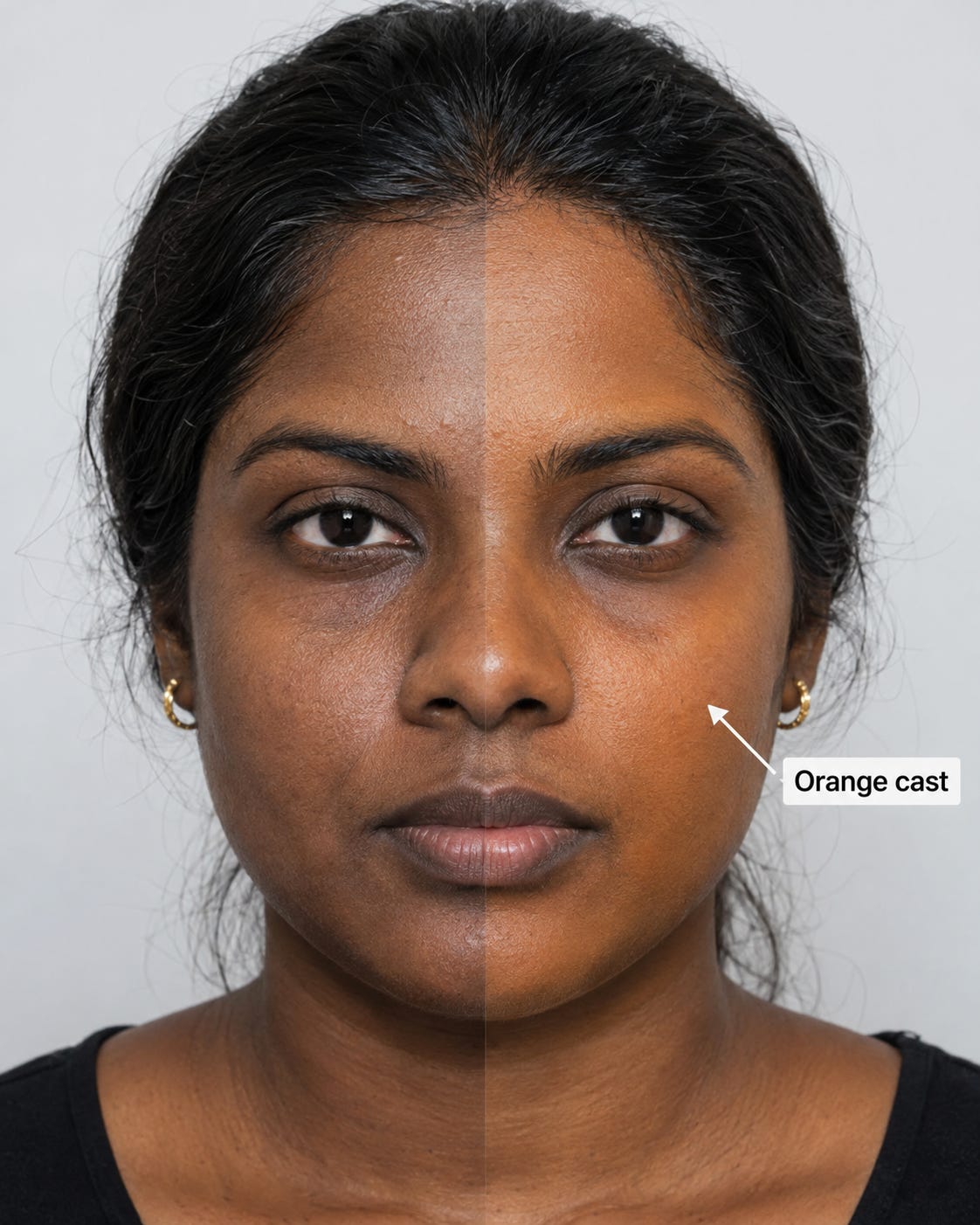
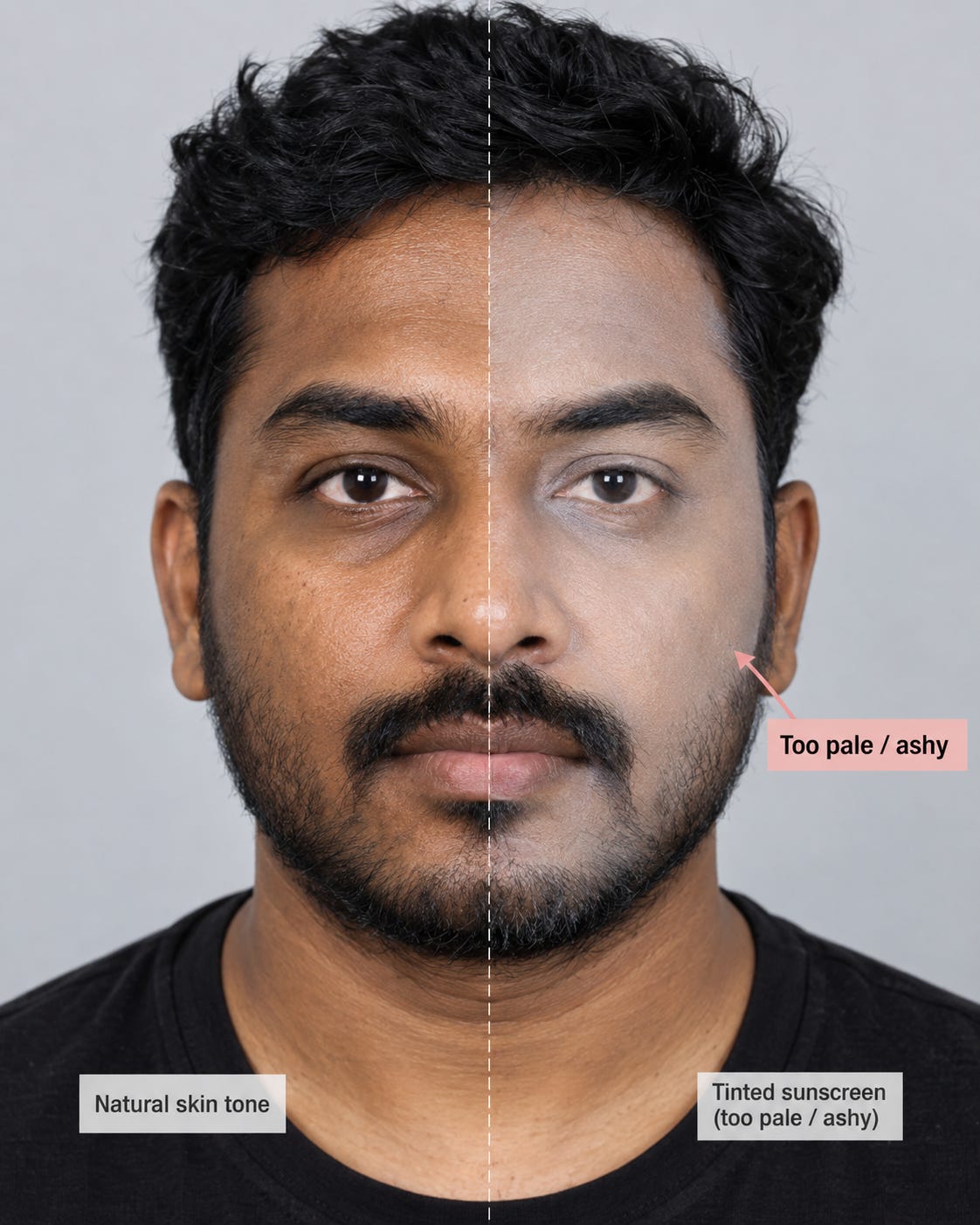
And this is not a trivial cosmetic issue. If a patient dislikes the way the sunscreen looks, they will apply less, apply it less often, or stop using it altogether.
The best visible-light protection is useless if the patient will not wear it.
So for melasma and post-inflammatory pigmentation, high UVB and UVA protection remain essential, and iron oxides add meaningful visible-light protection. But the formulation must also be cosmetically acceptable enough to be used properly.
Which leads to the bigger question: If the goal is to stop UVB, UVA and visible light from reaching the skin, are increasingly sophisticated sunscreens really the most reliable answer?
Part 4 asks whether the best sunscreen may, in fact, be something much simpler: A piece of cloth.
References
Mahmoud BH, Ruvolo E, Hexsel CL, et al. Impact of long-wavelength UVA and visible light on melanocompetent skin. J Invest Dermatol. 2010;130:2092–2097. doi:10.1038/jid.2010.95. Supported in part by an unrestricted grant from Johnson & Johnson Consumer Companies.
Duteil L, Cardot-Leccia N, Queille-Roussel C, et al. Differences in visible light-induced pigmentation according to wavelengths: a clinical and histological study in comparison with UVB exposure. Pigment Cell Melanoma Res. 2014;27:822–826. doi:10.1111/pcmr.12273.
Kohli I, Chaowattanapanit S, Mohammad TF, et al. Synergistic effects of long-wavelength ultraviolet A1 and visible light on pigmentation and erythema. Br J Dermatol. 2018;178:1173–1180. doi:10.1111/bjd.15940.
Castanedo-Cazares JP, Hernandez-Blanco D, Carlos-Ortega B, et al. Near-visible light and UV photoprotection in the treatment of melasma: a double-blind randomized trial. Photodermatol Photoimmunol Photomed. 2014;30:35–42. doi:10.1111/phpp.12086. No conflicts declared; funded by the investigators’ dermatology department.
Dumbuya H, Grimes PE, Lynch S, et al. Impact of iron-oxide-containing formulations against visible light-induced skin pigmentation in skin of color individuals. J Drugs Dermatol. 2020;19:712–717. doi:10.36849/JDD.2020.5032. Seven of eight authors were affiliated with L’Oréal Research and Innovation.
Passeron T, et al. International modified Delphi consensus statement on visible light photoprotection: effects, measurement, and recommendations. J Invest Dermatol. 2026;146:2094–2104.e2. doi:10.1016/j.jid.2026.03.012.
Ceresnie MS, Patel J, Lim HW, Kohli I. The cutaneous effects of blue light from electronic devices: a systematic review with health hazard identification. Photochem Photobiol Sci. 2022. PMID:36245016.