

“You can catch a lifelong infection from a kiss.”
Most people think of sexually transmitted infections in terms of intercourse — genital contact, bodily fluids, obvious risk.
But one of the most common human viruses spreads far more quietly.
Through saliva.
Through skin contact.
Through a kiss on the cheek.
And once it enters the body, it never leaves.
The most common example is one most people have already encountered — on their own lips
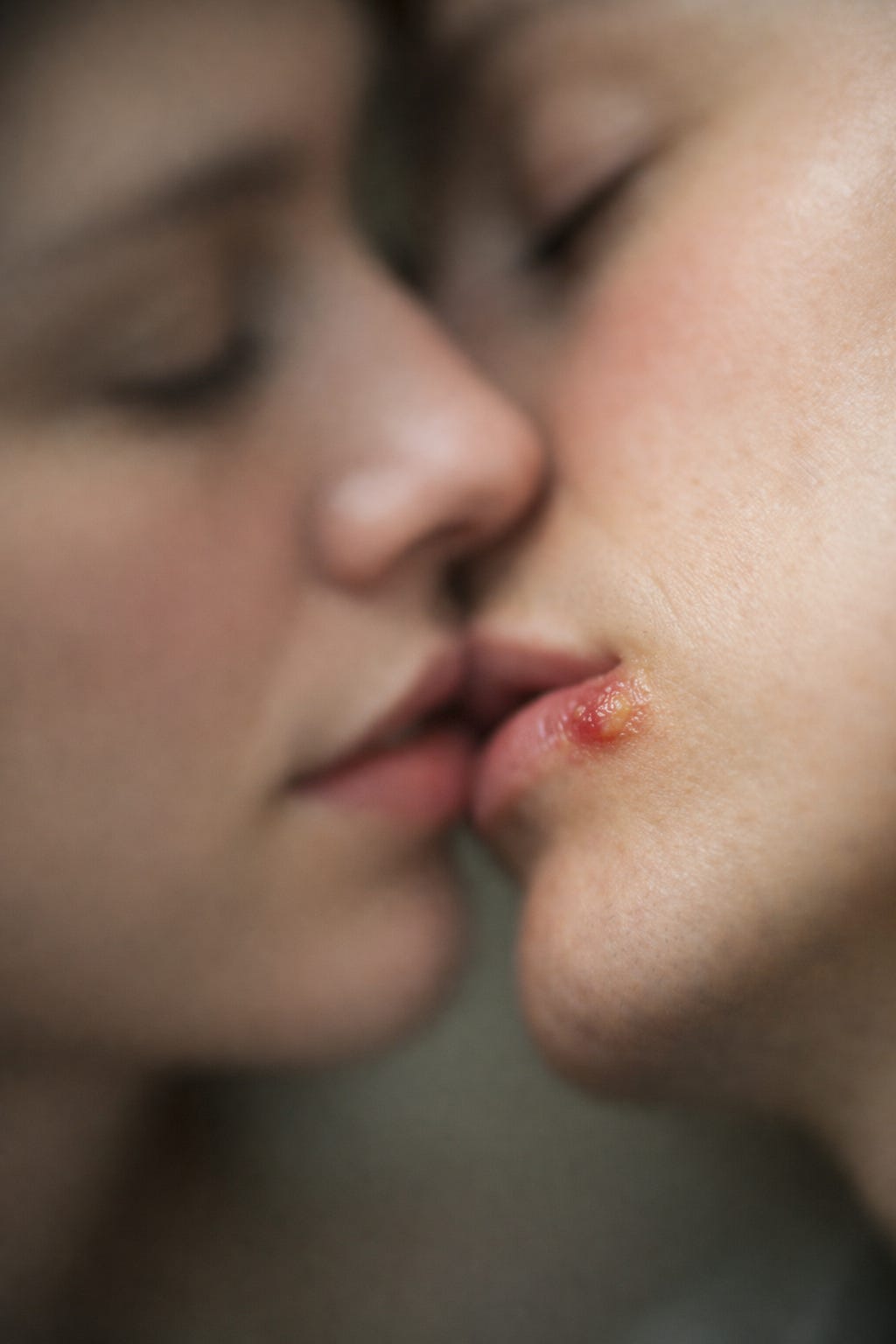
.
A Virus Carried by Most of the World
Herpes simplex virus type 1 (HSV-1) is not rare. It is one of the most prevalent human viruses on the planet.
WHO data estimates that roughly 67% of people under 50 carry it globally. In some regions, the figure is higher. Most carriers have no idea. They have never had a visible cold sore, or had one so mild they dismissed it.
Once the virus enters the body, it does not leave.
It retreats into sensory nerve cells — specifically the trigeminal ganglion, a cluster of nerves near the base of the skull. The immune system cannot reach it there. No antiviral clears it completely.
It simply waits

.
The Feature That Makes This Virus Unusual
From time to time, the virus reactivates. Familiar triggers — fever, stress, illness, fatigue, ultraviolet exposure — disturb the latency and cause the virus to travel back down the nerve to the skin surface.
The result is the cold sore: a cluster of small, painful blisters around the lip, healing within one to two weeks.
But here is the part that matters most, and is least understood:
The virus is present on the skin surface before the blister appears.
This is called asymptomatic viral shedding. There is no visible lesion. No warning. No reason to be cautious. And yet the virus is there, fully capable of transmission.
Studies using PCR sampling show HSV-1 shedding on oral mucosa on a significant proportion of days, even in people with no active lesions. The contagious period is not limited to the visible outbreak. It extends invisibly around it — and sometimes occurs entirely in the absence of any outbreak at all.
The implication is uncomfortable: avoiding contact with people who have visible cold sores is not sufficient protection.

How It Spreads
HSV-1 spreads through direct contact with infected skin or saliva.
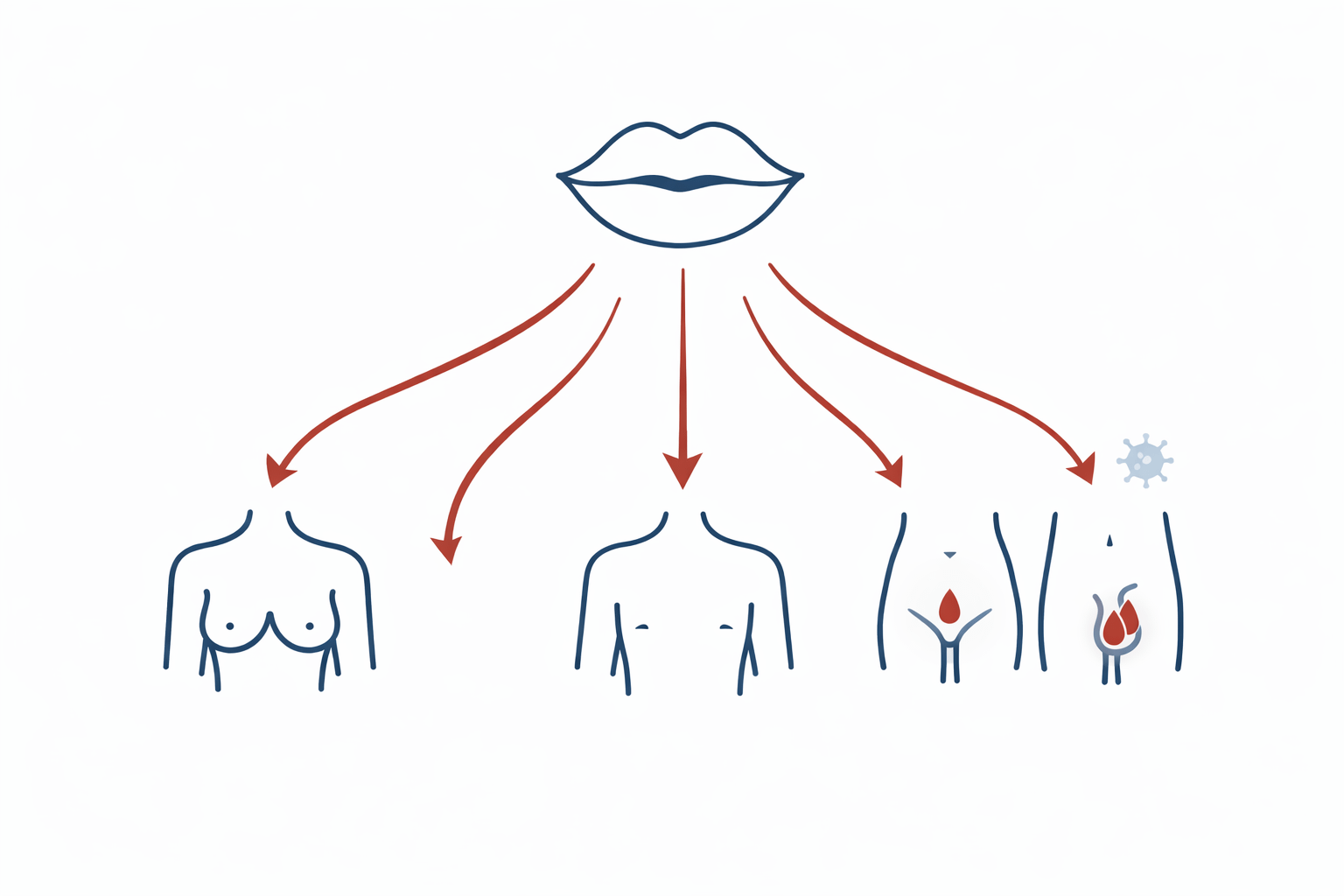
Kissing is the most common route. Sharing utensils, drinks, or lip balm can transmit it. Oral contact during intimacy is another route — and this matters more than most people realise.
HSV-1 is now one of the leading causes of genital herpes.
That fact surprises people. In several countries, HSV-1 now accounts for the majority of new genital herpes diagnoses in young adults — the virus that causes cold sores, transmitted through oral contact, establishing genital infection. This is epidemiologically documented and increasingly the norm in certain populations.
The old distinction between HSV-1 as an oral infection and HSV-2 as a genital one no longer holds cleanly
.
Primary Infection Versus Recurrence
Most people acquire HSV-1 in childhood — from a relative’s kiss, a shared cup, ordinary proximity. In children and healthy adults, primary infection is often mild or silent.
In a seronegative adult encountering the virus for the first time, however, primary infection can be severe — extensive oral ulceration, systemic symptoms, high fever, lymphadenopathy. A different clinical picture from the recurrent cold sore most people recognise.
Beyond the mouth, HSV-1 occasionally causes herpetic whitlow — painful vesicular infection of the finger — and herpetic keratitis, a leading cause of infectious corneal blindness globally. In immunocompromised patients, the virus behaves differently altogether; dissemination and atypical presentations are real risks in that population.
Why Strangers Should Not Kiss Babies

Neonates have immature immune systems and no prior exposure to HSV-1.
Neonatal herpes is rare. But when it occurs, it can be severe — with potential for neurological involvement in the most serious cases. The source is typically an adult with active viral shedding, visible or not, who kisses the infant on the face. Most are unaware they are infectious at the time.
This is why paediatricians advise against face-kissing of young infants by visitors. Not alarmism. A specific, documented mechanism with disproportionate consequences in a vulnerable host.
What This Virus Teaches Us About Contagion
HSV-1 is not dangerous for most healthy people. Cold sores are unpleasant, not life-threatening. Antivirals reduce the frequency and duration of outbreaks.
But the biology is instructive.
The virus persists not by overwhelming the immune system but by hiding from it — retreating into the nervous system where it cannot be eliminated, resurfacing on its own schedule, spreading in the absence of symptoms. It has quietly shifted its epidemiological niche from a childhood oral infection to a significant cause of adult genital disease, simply by following the routes of human contact.
There is a lesson here about the difference between absence of symptoms and absence of disease. Between what is visible and what is present.
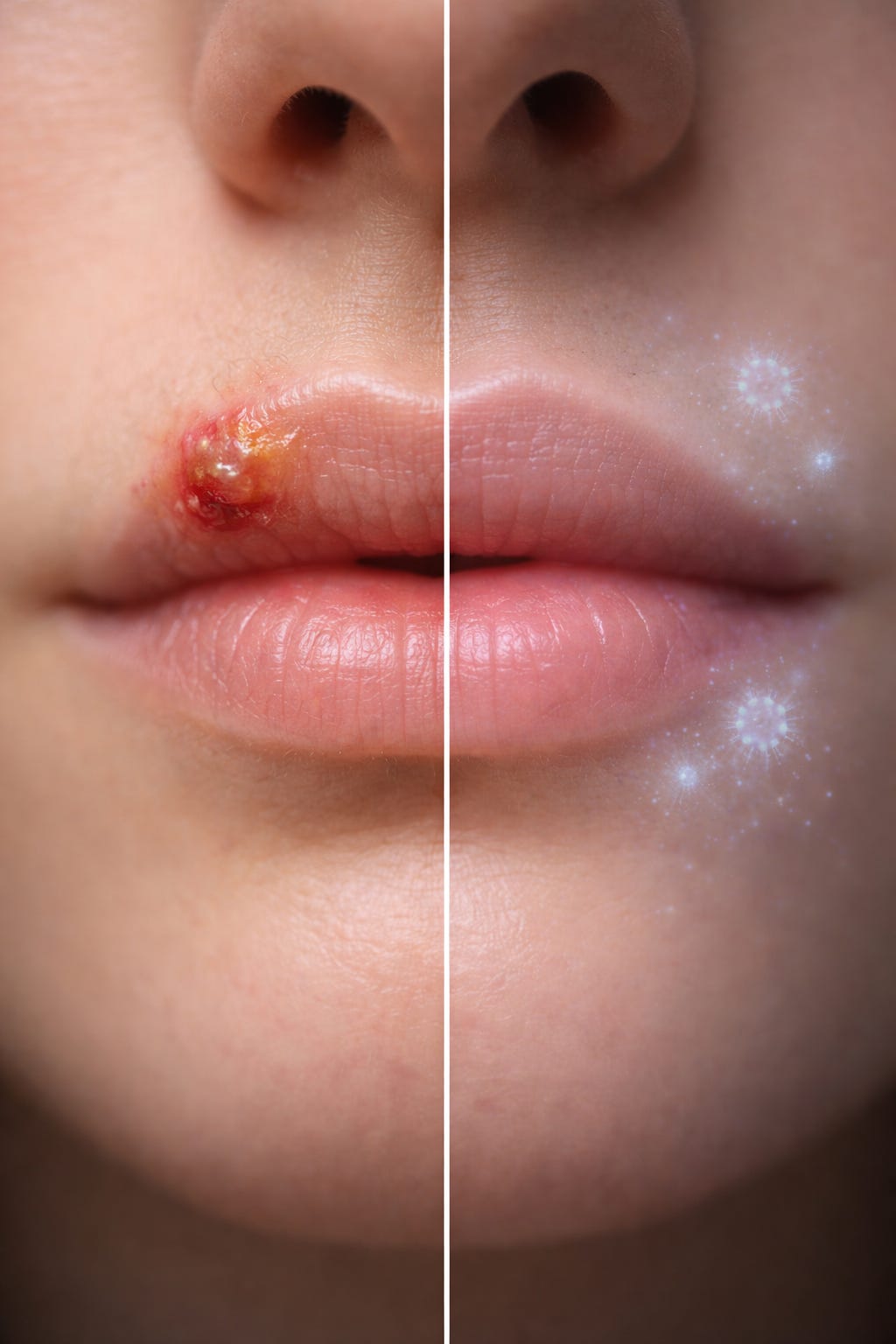
The cold sore announces itself. The virus does not.
HSV-1 seroprevalence data: WHO Global Health Sector Strategy on Sexually Transmitted Infections, 2022.
HSV-1 genital herpes trends: Looker et al., PLOS ONE; Bernstein et al., Journal of Infectious Diseases.