

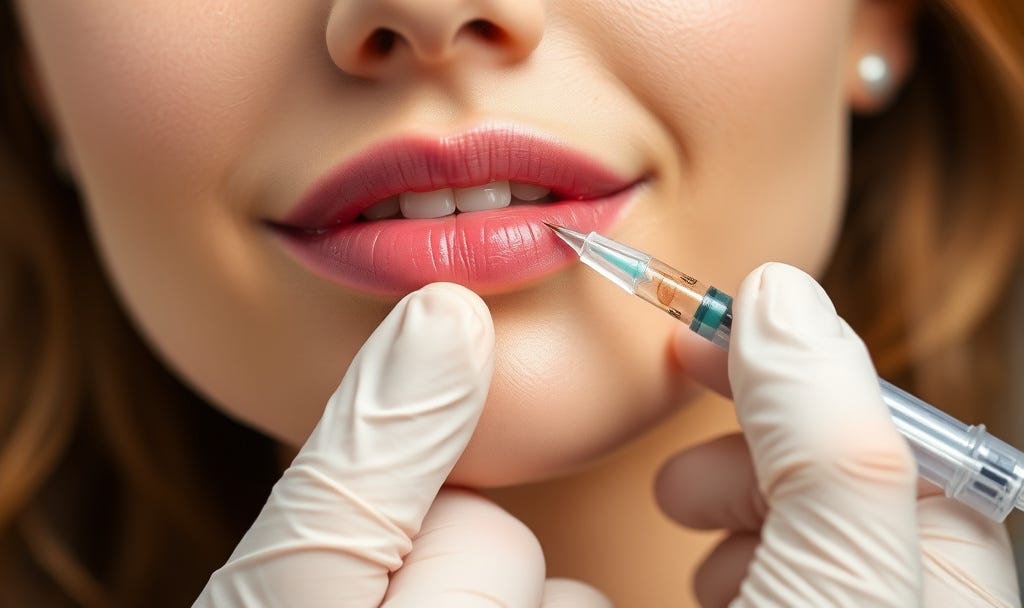
For over a decade, aesthetic medicine has leaned on a comforting sentence:
“It’s temporary. If you don’t like it, it dissolves.”
That sentence did more than reassure patients. It normalised structural intervention as casual. It made facial augmentation feel reversible, low-stakes — almost cosmetic in the literal sense of the word.
But biology is rarely that simple.
And imaging is beginning to expose the gap between narrative and reality.
The Psychological Power of “Temporary”

Hyaluronic acid fillers were not embraced merely because they worked.
They were embraced because they felt safe.
Non-surgical. Office-based. Minimal downtime. Reversible. Temporary.
Temporary was the keystone. It reduced fear. It allowed younger patients to experiment. It implied a reset button.
Yet the 6–18 month dissolution timeline was largely derived from clinical observation — not from long-term imaging of tissue persistence. The assumption was intuitive and reassuring. It was also, it turns out, premature.
Now we have imaging.
And it complicates the story.
What MRI Has Actually Shown
High-resolution MRI studies have demonstrated detectable hyaluronic acid filler persisting in facial tissue years after injection — in some cases well beyond the commonly cited resorption window.
Master’s 2021 paper in Plastic and Reconstructive Surgery proposed MRI as a tool to monitor filler placement and longevity, documenting persistence in deep fat compartments beyond expected timelines. His 2022 follow-up in PRS Global Open tracked a single patient sequentially and found filler persisting in the lateral face and mid-face at 27 months — while the chin showed near-complete degradation at 19 months. Location and depth, it turns out, matter considerably.
The most comprehensive data came in 2024: a review of 33 MRI studies by Master et al. in PRS Global Open found HA filler detectable in all 33 patients, with no complete dissipation observed over two years. Among those patients, 12 had not received injections for over five years. One showed persistence at 15 years.
Tissue-level evidence adds further texture. A 2022 histological study in Dermatologic Surgery reviewed 36 patients in whom filler was incidentally discovered during Mohs micrographic surgery — patients who had not presented for filler assessment at all. Filler persisted histologically for up to 10.75 years in one patient, and for three years or more in over a third of those who could recall their injection timeline.
Persistence on imaging does not automatically mean pathology.
But it does dismantle the clean narrative that filler predictably disappears on schedule.
Migration: Not Theoretical
MRI and ultrasound imaging have also shown that filler does not always remain confined to the original injection plane.
Anatomical pathways — muscle movement, fat compartment boundaries, lymphatic channels — can facilitate redistribution over time. Jordan and Stoica reviewed the mechanisms of filler migration as early as 2015, documenting cases of material found in locations distant from the injection site, sometimes years later.
Clinically, this is something many experienced practitioners have quietly observed for years: blurring of lip borders after serial augmentation, midface heaviness that was never intended, persistent tear trough edema, delayed inflammatory nodules. Imaging simply gives that clinical observation a biological substrate.
Not every patient. But enough to warrant intellectual honesty.
The Accumulation Problem
Here is the question few ask directly.
If filler persists longer than assumed — and patients return annually for “maintenance” — what exactly are we maintaining?
In many cases, we are not replacing dissolved material. We are layering additional biomaterial onto residual gel. Year upon year. The industry calls the end result “overfilling.” A more biologically honest term might be cumulative biomaterial load.
Over time, that cumulative load can alter facial contour transitions, tissue biomechanics, lymphatic drainage, and inflammatory responsiveness. We do not yet have robust 20-year longitudinal data on serial filler layering beginning in early adulthood.
Absence of evidence is not proof of harm. But it is not proof of long-term neutrality either.
The Reversibility Illusion
Hyaluronidase is frequently described as an undo button. It is better understood as a corrective tool with real limits.
Dissolution may be incomplete. It does not perfectly distinguish between injected and native hyaluronic acid. Tissue that has structurally adapted over time may not return cleanly to baseline. And of course, not all fillers are hyaluronic acid — poly-L-lactic acid, calcium hydroxylapatite, and permanent fillers operate under entirely different biological rules, with no enzymatic reversal available at all.
Reversibility exists — but it is conditional, not guaranteed.
Temporary is a gradient, not a promise.
Why I Often Recommend Alternatives
This is where my clinical position diverges from mainstream aesthetic messaging.
When patients consult me for volume concerns, I frequently begin elsewhere. Not because I am categorically anti-aesthetic — but because I prefer regenerative over additive strategies.
Lasers, microneedling, platelet-rich plasma, and energy-based devices do not implant foreign material. They stimulate endogenous repair pathways: collagen remodelling, dermal thickening, vascular normalisation. They work with tissue biology rather than occupying space within it.
Are they slower? Often. Do they produce the immediate projection of filler? Not always. But they modify skin quality and structural support without accumulating biomaterial load. In long-term aesthetic thinking, that distinction matters.
The Preventive Filler Trend
An increasingly common narrative is filler in patients in their early 20s as “prevention” — preserving volume before decline sets in.
The premise is intuitive. But it presumes that aging is linear and predictable, that injected gel mimics physiological volume distribution over decades, and that serial exposure to implanted material from early adulthood is biologically neutral.
We do not have multi-decade data to confidently support any of those assumptions. That does not make preventive filler reckless. But it does make certainty premature — and premature certainty in medicine has a poor track record.
This Is Not a Rejection of Fillers
Used conservatively, anatomically intelligently, and sparingly, fillers can restore proportion and address genuine structural deficits. They are powerful tools.
But they are not skincare.
They are implanted biomaterials.
And implanted biomaterials deserve the same long-term scrutiny we apply in every other area of medicine.
The Ethical Obligation
The deeper issue is narrative integrity.
If imaging shows variability in persistence, we should communicate variability — not absolutes. If redistribution is plausible, we should acknowledge plausibility. If accumulation is possible, we should discuss cumulative exposure.
Informed consent is not a disclaimer. It is intellectual honesty.
My Position
I no longer describe dermal fillers as simple, temporary enhancements.
They are structural interventions with long-term biological implications — often subtle, often beneficial — but not trivial. Aesthetic medicine should not be driven by the next three months of mirror satisfaction. It should be guided by the next decade of tissue consequence.
We are not here to sell volume.
We are here to protect faces — and futures.
If you believe aesthetic medicine deserves the same evidentiary rigour we demand everywhere else in medicine — you’re in the right place.
References
Master M. Hyaluronic acid filler longevity and localization: magnetic resonance imaging evidence. Plast Reconstr Surg. 2021;147(1):50e–53e. https://doi.org/10.1097/PRS.0000000000007429
Master M, Roberts S. Long-term MRI follow-up of hyaluronic acid dermal filler. Plast Reconstr Surg Glob Open. 2022;10(4):e4252. https://doi.org/10.1097/GOX.0000000000004252
Master M, Azizeddin A, Master V. Hyaluronic acid filler longevity in the mid-face: a review of 33 magnetic resonance imaging studies. Plast Reconstr Surg Glob Open. 2024;12(7):e5934. https://doi.org/10.1097/GOX.0000000000005934
Chow KV, Urman D, Cabral ES, Shim EK, Bennett RG. Hyaluronic acid filler incidentally found during Mohs micrographic surgery: observations in 36 patients regarding skin depth, degradation size, and estimated persistence time. Dermatol Surg. 2022;48(4):401–405. https://doi.org/10.1097/DSS.0000000000003380
Jordan DR, Stoica B. Filler migration: a number of mechanisms to consider. Ophthalmic Plast Reconstr Surg. 2015;31(4):257–262. https://doi.org/10.1097/IOP.0000000000000368