

Hair-loss advertisements frequently use the phrase “clinically proven.”
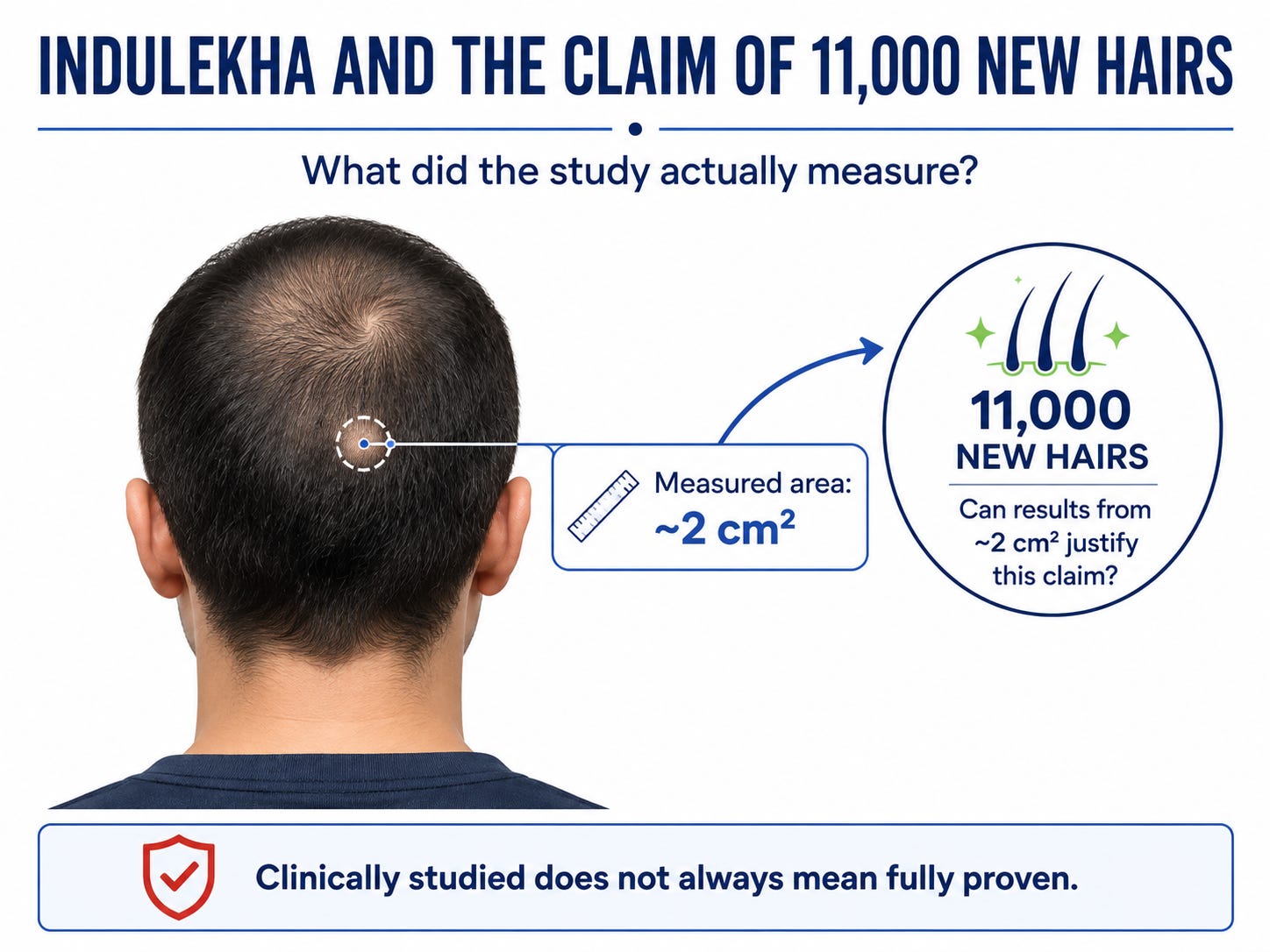
Indulekha Bringha Hair Growth Serum goes further, claiming that it can help grow more than 11,000 new hairs in 90 days.
Unlike many cosmetic hair products, Indulekha does have a published clinical study behind it. But the advertising claim is considerably stronger than what the study itself proves.
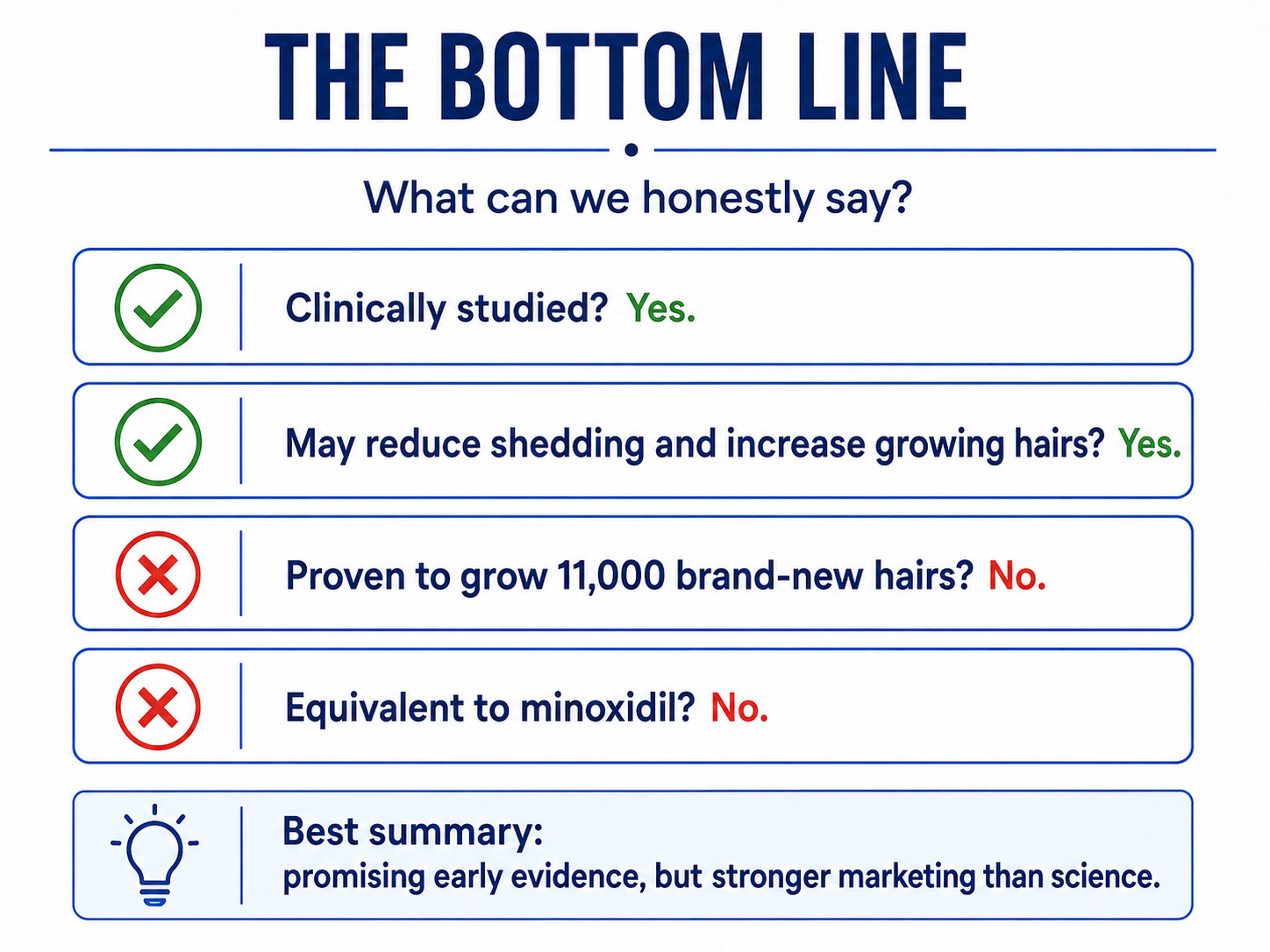
The most accurate conclusion is this: Indulekha is clinically studied, but its headline claim is not conclusively proven.
First, understand how hair grows
Every hair follicle repeatedly moves through different phases.
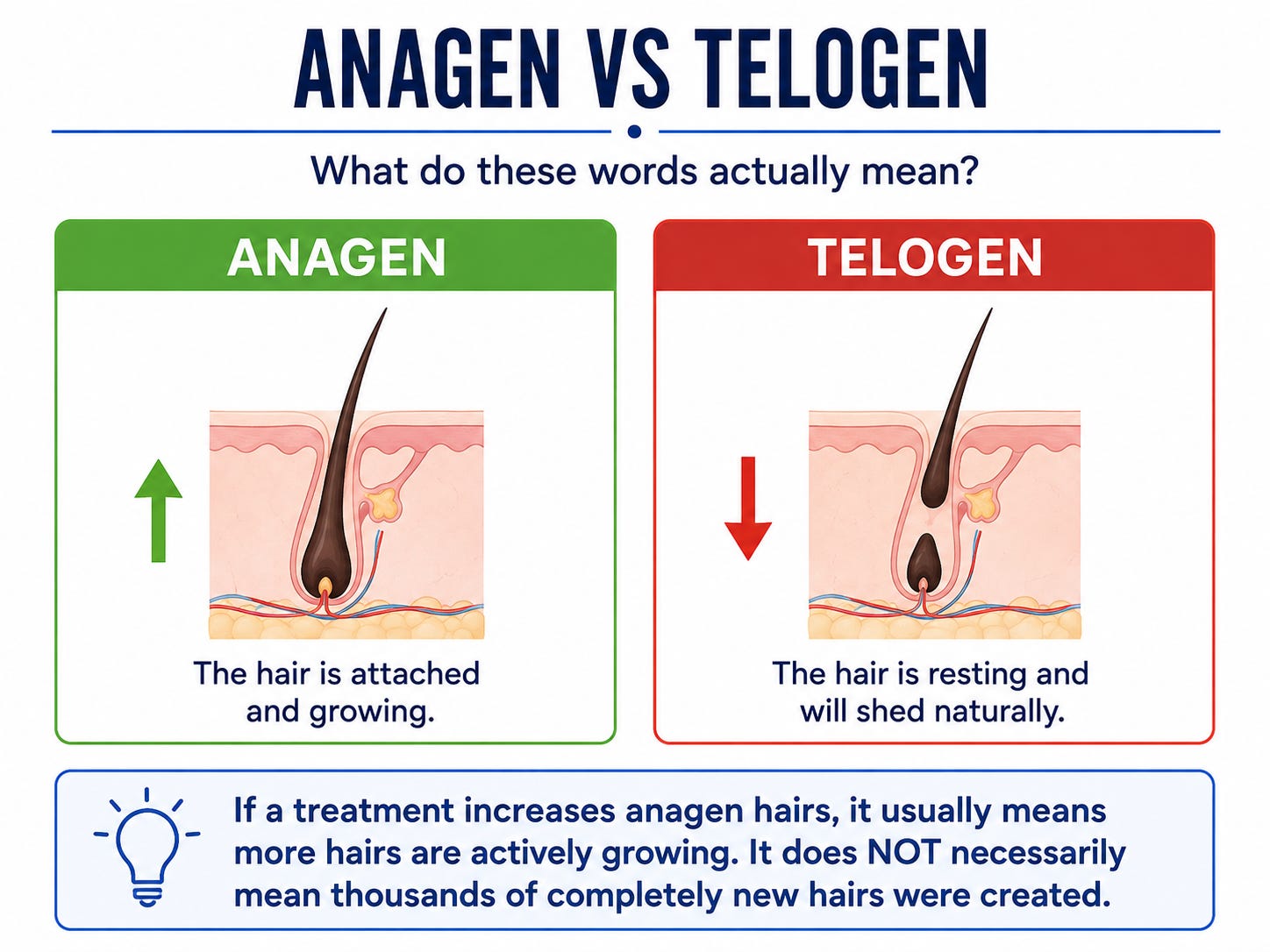
Anagen: the growing phase
During anagen, the hair is actively growing. Normally, around 85–90% of scalp hairs are in this phase.
Telogen: the resting phase
During telogen, the hair has stopped growing and is preparing to shed. Roughly 10–15% of scalp hairs are normally in this phase.
There is also a short transition phase called catagen, but the main distinction relevant to this study is between growing anagen hairs and resting telogen hairs.
A treatment that increases the number of anagen hairs may make the scalp appear fuller. But that does not necessarily mean that entirely new follicles—or thousands of completely new hairs—have been created.
It may simply mean that more existing follicles are actively producing visible hair.
What did the Indulekha study find?
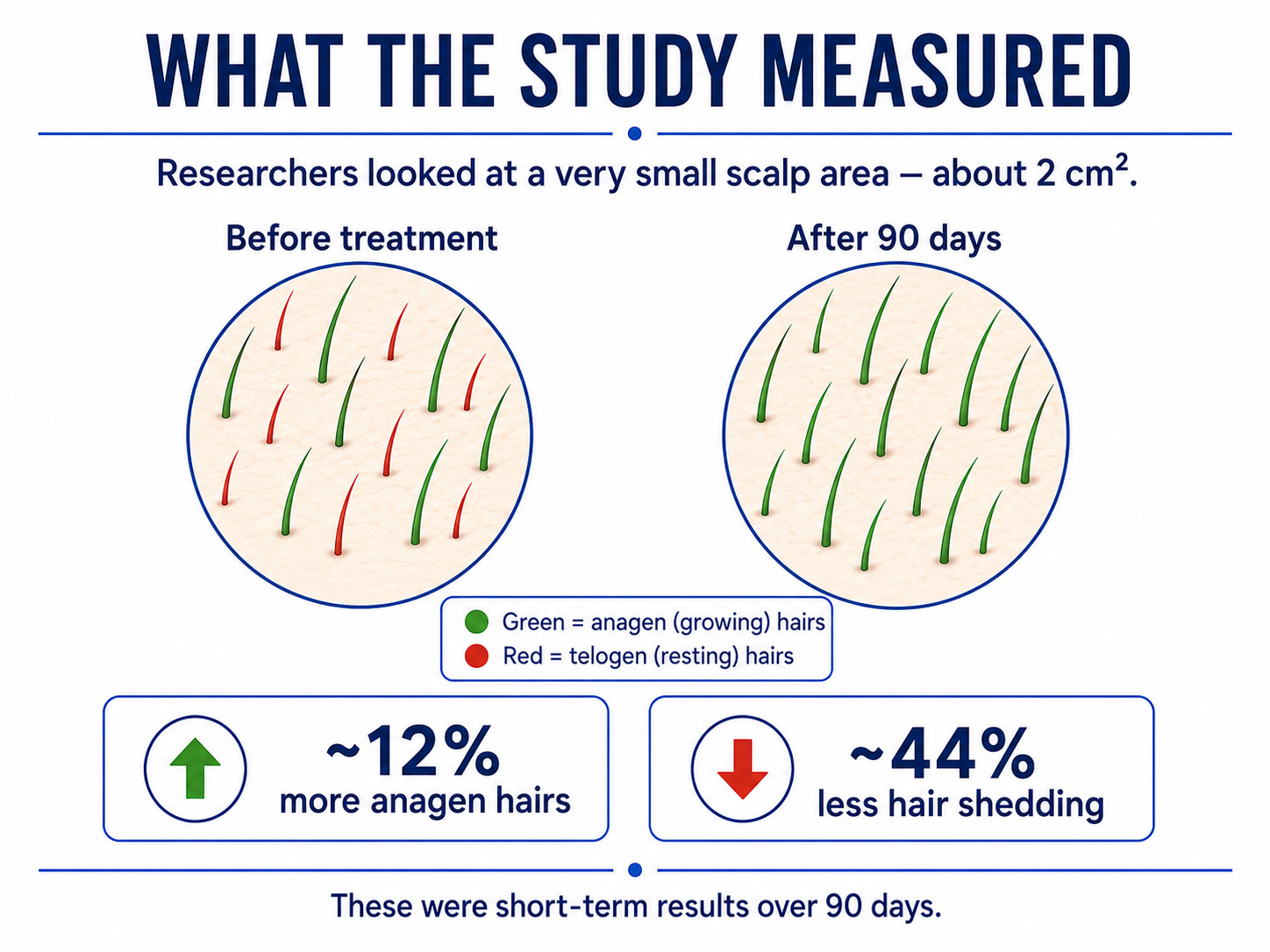
The published study compared Indulekha Bringha serum with another cosmetic serum containing 3% Redensyl.
Seventy-four participants completed 90 days of treatment.
The Indulekha group reportedly showed:
approximately a 12% increase in anagen hair density;
around a 44% reduction in measured hair shedding;
improvements in some other hair-growth and hair-pull measurements.
These are encouraging findings. They suggest that the serum may reduce shedding and increase the number of visibly growing hairs over the short term.
However, these results do not automatically prove the advertising claim.
Were 11,000 new hairs actually counted?
No.
Researchers examined a very small photographed area of the scalp—approximately 1.5–2 cm².
The change seen within that small area appears to have been mathematically extrapolated across a much larger estimated scalp area to produce the figure of approximately 11,000 hairs.
This creates two important problems.
First, the study did not directly count 11,000 individual hairs across anyone’s entire scalp.
Second, the measurement was an increase in anagen hair density. An anagen hair is an actively growing hair, but it is not necessarily a newly created hair.
The result could reflect existing follicles remaining in the growth phase for longer, resting follicles beginning another growth cycle, or previously less-visible hairs becoming easier to detect.
Therefore, the scientifically accurate statement would be:
The study found an increase in measured growing hairs within a small scalp area.
That is not identical to saying:
The serum was proven to create 11,000 brand-new hairs.
Why the study does not settle the question
The study has several important limitations.
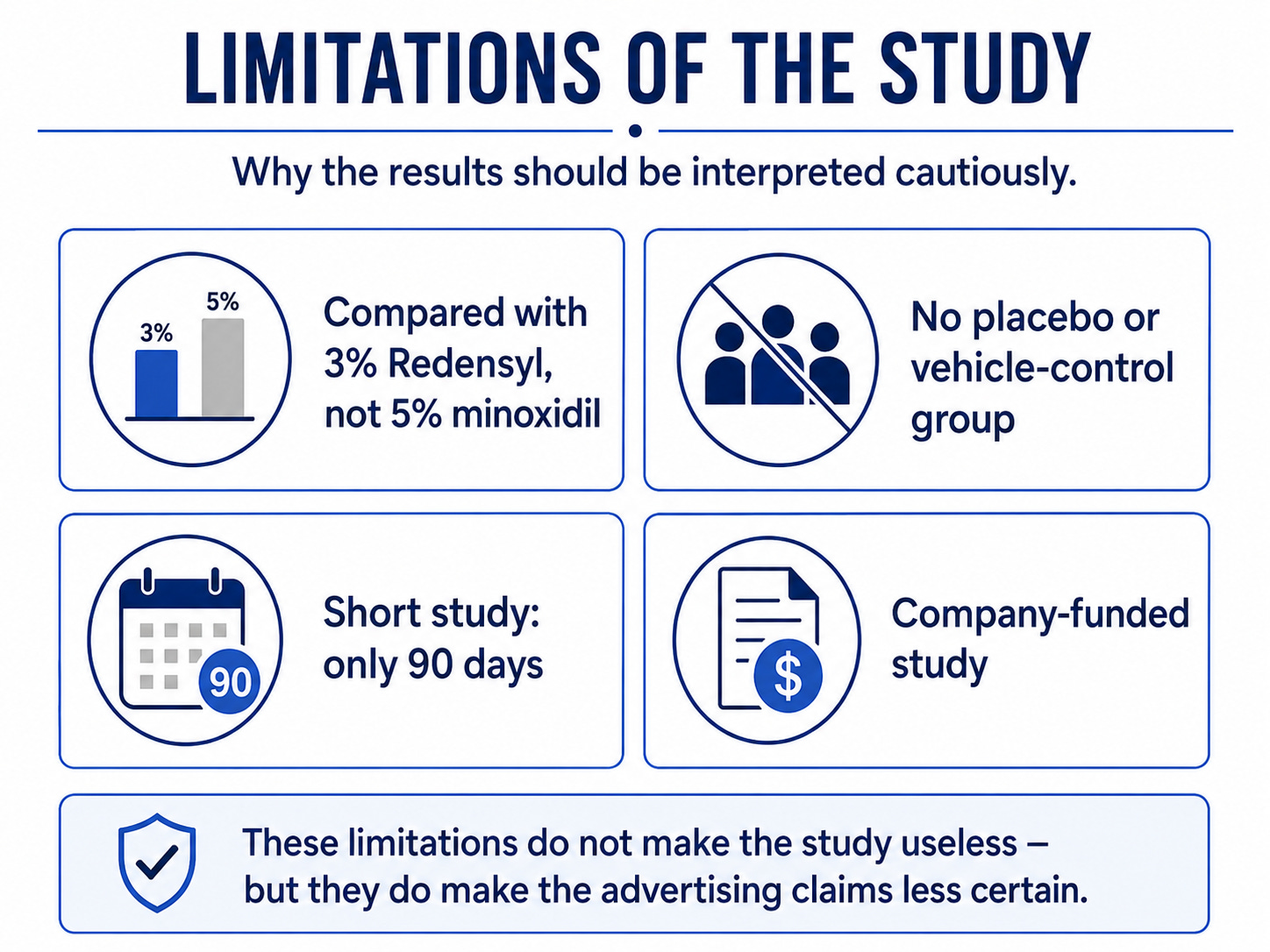
It was not compared with minoxidil
The comparator was 3% Redensyl, another cosmetic hair-growth ingredient with a limited independent evidence base.
The study did not compare Indulekha with topical minoxidil, which has a much larger body of evidence for pattern hair loss.
Therefore, the study cannot establish that Indulekha is equivalent or superior to minoxidil.
There was no placebo or vehicle-control group
Without a control serum containing no proposed active ingredients, it is difficult to separate the effect of the formulation from:
scalp massage;
the serum base itself;
natural fluctuations in shedding;
seasonal changes;
or regression towards the average.
The study lasted only 90 days
Hair grows slowly. Three months is a relatively short period for judging a hair-loss treatment.
The study therefore provides short-term evidence, not proof of sustained long-term benefit.
It was company funded
The trial was funded by Hindustan Unilever, and the authors were company researchers.
Industry funding does not automatically invalidate a study. However, it increases the importance of independent replication, transparent statistical reporting and cautious advertising.
The findings have not yet been confirmed through large, independent trials.
Is the serum useless?
No.
It would be equally inaccurate to dismiss the study completely.
Indulekha has more clinical evidence than many cosmetic hair serums. The trial suggests that it may provide a modest short-term reduction in shedding and may increase the proportion of actively growing hairs.
Patients who want a cosmetic serum and understand the limitations may reasonably choose to try it.
However, it should not be presented as an established replacement for evidence-based medical treatment in androgenetic alopecia or other diagnosed causes of hair loss.
Persistent or progressive hair loss still requires proper diagnosis. Nutritional deficiency, thyroid disease, telogen effluvium, androgenetic alopecia, alopecia areata and inflammatory scalp disorders cannot all be treated with the same serum.
This article is intended for scientific education and does not constitute individual medical advice. The appropriate treatment for hair loss depends on its underlying diagnosis.